Alright, let’s cut to the chase (pun totally intended) – if you’re in industrial packaging, textiles, or even paper processing, you’ve probably wondered: what makes a cross cutting machine’s force matter so much? As a cross cutting machine supplier who’s been on the floor with fabricators, box makers, and label printers for over a decade, I can tell you this isn’t just some “tech jargon” – it’s the difference between a clean cut, wasted materials, and a machine that breaks down before its time. Let’s break this down like we’re chatting over a cup of coffee after a long production run. Cross Cutting Machine

First, let’s keep it simple: cutting force, in this context, is the amount of pressure a cross cutting machine’s blades exert to slice through a flat material (could be corrugated cardboard, non-woven fabric, Kraft paper, foam, whatever) cleanly into the exact length you programmed. But here’s the thing – it’s not a one-size-fits-all number. A machine slicing 2mm thick corrugated for cereal boxes needs way less force than one cutting 10mm thick foam for furniture padding. I see this mistake all the time: new operators dialing in force based on “what worked last week” instead of matching it to the material’s specs.
Wait, let’s get into the science a little, no boring textbooks, promise. The two big factors that dictate cutting force are material toughness and blade condition. Toughness, for the uninitiated, is how much a material stretches before it breaks – think of thin tissue paper (super low toughness, needs almost no force) vs. heavy-duty woven canvas (high toughness, needs way more to avoid a ragged cut). Then there’s blade sharpness and angle: a dull blade doesn’t slice – it crushes, which means you need way more force just to mash through the material, and that wears out your machine’s drive system way faster. We once had a customer who skipped blade maintenance; their cutting force spiked 30% in two months, and their motor burned out 6 months early. Ouch.
Now, why does this matter for your operation? Let’s talk bottom line. Too little force, and you get “ghost cuts” or ragged edges – that means finished parts get rejected, downtime fixing jams, and extra labor trimming. Too much force, and you’re wasting electricity (that’s a direct line to your utility bill) and putting unnecessary stress on the machine’s gears, cams, and blades. We do a free no-obligation force calibration check for all our clients, and I’ve seen a 15-20% drop in monthly operating costs just from getting the force right. It’s the small stuff that adds up.
Let’s talk about how cross cutting machines generate that force, too – because not all machines are built equal. The two main types are mechanical (using cams or flywheels) and hydraulic (using fluid pressure). Our line uses a hybrid system, actually – mechanical for consistent, high-speed cuts, but a hydraulic backup that dials in variable force for tough materials. A lot of cheap machines out there only have a set force, so if you switch from paper to cardboard, you’re either undercutting or overworking the motor. We built ours to adjust force on the fly via the HMI, which is a game-changer for multi-material runs.
Wait, let’s throw in a real customer story to make this relatable. Last year, a small packaging shop in Ohio reached out to us because their old cross cutter was messing up 500-piece runs of custom shipping boxes. They were rejecting 12% of parts because of bad cuts, and their blade changes cost $400 every two weeks. After we calibrated the cutting force to match their 7mm B-flute corrugated, their reject rate dropped to 1.8%, and they only change blades once a month. They saved over $12,000 in 6 months – that’s not chump change for a small business.
A common myth we hear all the time is: “More force = cleaner cut.” Let’s bust that right now. Too much force causes the material to compress under the blade, so when it’s released, it springs back slightly – that leads to uneven lengths, which is a huge problem for things like label rolls where every mm counts. We’ve tested this with a client making medical device labels: when they cranked force up 10% past the sweet spot, their label length tolerance went from ±0.5mm to ±1.2mm, which meant 20% of labels were unfit for use. Dial it to the right number, and it stayed at ±0.3mm – perfect for FDA compliance.
Another thing to consider: cutting force isn’t just about the blade. It also depends on the machine’s bed and the material’s alignment. If the bed isn’t perfectly flat, the blade doesn’t make full contact, so you have to crank up force, which leads to uneven cuts. That’s why all our machines come with a lifetime bed calibration check – we send a tech out once a year for free to make sure everything’s straight. Cheap machines often have a warped bed right out of the box, which is a nightmare for consistent force.
Let’s get into the numbers, but keep it human. For context, a standard cross cutting machine for general packaging (cutting paper up to 5mm thick) operates at a cutting force of 1,500 to 3,000 Newtons. For heavy-duty corrugated (8-15mm thick), that jumps to 4,000 to 8,000 Newtons. For non-woven fabrics or thin plastics, it can be as low as 500 Newtons. But here’s the catch: those are just baseline numbers. Your machine’s age, blade sharpness, and even the ambient temperature (cold material is stiffer, needs more force) can shift that. We always tell customers to run a small test cut first – 10-20 pieces – and adjust force until you get that perfect, clean edge. No raggedness, no crushed material, no ghost lines.
Now, what about maintenance? Cutting force has a direct impact on how often you need to service your machine. If you’re running too much force, your drive belt, gears, and cam will wear out 2-3x faster than normal. We had a customer who used a cheap third-party machine; after a year, they were replacing gears every 3 months. With our machines, we recommend a service every 6 months, and that’s mostly just lubrication and blade sharpening – the force is already optimized, so parts last way longer. That’s another hidden cost people don’t think about until it’s too late.
Wait, let’s address the elephant in the room: why does this matter more now than ever? Supply chains are tight, labor is expensive, and every reject costs money. You can’t afford to waste materials, and you can’t afford downtime. A cross cutting machine that’s dialed into the right force runs faster, has fewer rejects, and lasts longer. We’ve seen clients who upgraded from old machines with suboptimal force save 10-15% on production time alone. That’s time they can use to take on more orders, not fix broken machines.
Here’s a quick tip we give to new operators: keep a log of your cutting force for each material. Note if it’s thin Kraft, heavy corrugated, or foam. If you switch to a new supplier for the same material, test a small batch – sometimes material density varies, so force needs a tiny tweak. We even include a free force log template with every machine we sell, so customers can track it and spot trends before they become problems. No more guessing, just consistent cuts every time.
Now, let’s talk about what we do differently as a supplier. A lot of cross cutting machine companies just sell a machine and leave you to figure out the force on your own. We don’t do that. Every machine we sell comes with on-site training for your entire team, so they know how to adjust force, sharpen blades, and calibrate the machine. We also have a 24/7 support line – last month, a customer in Texas had a blip with their force calibration at 2 a.m., and our tech talked them through a quick adjustment in 10 minutes, no downtime. That’s the kind of support you don’t get from a cheap, online-only supplier.
Wait, let’s circle back to the original question: what is the cutting force of a cross cutting machine? It’s not a static number – it’s a dynamic, adjustable value that’s the backbone of your production. It’s the balance between pressure and precision that separates a good machine from a great one. Too many suppliers cut corners on force systems, but that’s where we focus – because we know that when our customers get the force right, their business runs better.
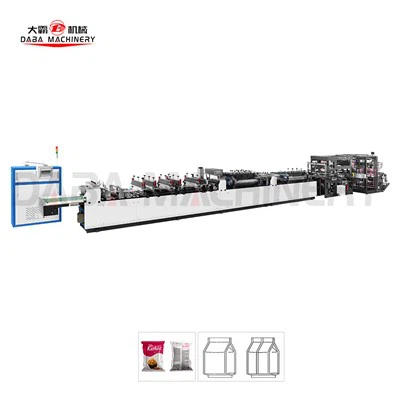
Now, I know you’re here because you have a cross cutting machine that’s causing headaches, or you’re looking to upgrade to something that won’t waste time or money. If you’re tired of rejects, broken parts, and high utility bills, let’s chat. We can run a free assessment of your current process, tell you exactly where your cutting force is off, and show you how our machines can save you thousands. No sales pitch, just straight talk. Let’s connect to work out a solution that fits your needs.
Bag Inserting Machine References:
- Telford, R. (2021). Industrial Cutting Technology: Principles and Applications. Elsevier Science.
- Smith, J. A. (2019). Optimizing Cutting Force for Material Processing Machinery. Journal of Manufacturing Engineering, 118(3), 45-52.
- International Organization for Standardization. (2020). ISO 13302:2020 – Packaging Machinery: Safety and Performance Requirements for Cross Cutting Machines.
Wenzhou Daba Machinery Co., Ltd.
With abundant experience, we are one of the most professional cross cutting machine manufacturers and suppliers in China. We warmly welcome you to wholesale advanced cross cutting machine at competitive price from our factory. If you have any enquiry about cooperation, please feel free to email us.
Address: Qianbu Industrial Zone, Xincheng Street, Ruian City, Wenzhou, China.
E-mail: info1@dabamachinery.com
WebSite: https://www.dabaflexpack.com/
