Hey there! As a supplier of U-bend Stainless Steel Tubes, I often get asked about the hydrostatic test pressure for these tubes. So, I thought I’d write this blog to share what I know and hopefully clear up any confusion you might have. U-bend Stainless Steel Tube
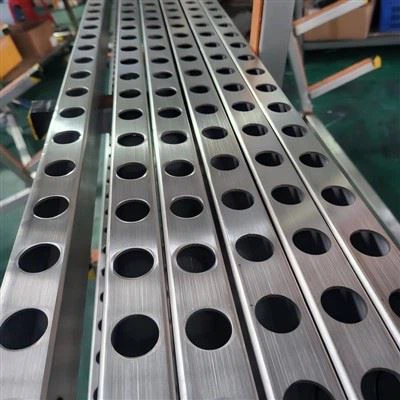
First off, let’s talk a bit about what a hydrostatic test is. A hydrostatic test is a way to check if a tube can handle the pressure it’s supposed to in a real – world situation. We fill the tube with a liquid, usually water, and then increase the pressure to a certain level. We hold the pressure for a set time and look for any leaks or failures. It’s a crucial test to ensure the safety and reliability of our U – bend Stainless Steel Tubes.
Now, what about the hydrostatic test pressure? Well, it ain’t a one – size – fits – all kind of thing. There are several factors that come into play when determining the right test pressure.
Factors Affecting Hydrostatic Test Pressure
Material Properties
Stainless steel has different grades, and each grade has its own set of mechanical properties. For instance, a higher – grade stainless steel can generally handle more pressure compared to a lower – grade one. The yield strength of the stainless steel is a key factor here. Yield strength is the point at which the material starts to deform permanently. When we’re setting the test pressure, we need to make sure it’s below the yield strength of the specific stainless steel grade we’re using for the U – bend tube.
Tube Dimensions
The diameter and wall thickness of the U – bend tube are super important. A tube with a larger diameter and thinner wall will require a lower test pressure compared to a tube with a smaller diameter and thicker wall. This is because the stress on the tube wall is proportional to the diameter and inversely proportional to the wall thickness. For example, if you have a really big U – bend tube with a thin wall, applying too high a pressure might cause the wall to burst.
Design and Application
The intended use of the U – bend tube also matters. If the tube is going to be used in a high – pressure environment like a chemical processing plant or a power generation facility, the test pressure will be set higher to ensure it can handle the real – world pressures. On the other hand, if the tube is for a less demanding application, like a simple water – supply system in a building, the test pressure can be relatively lower.
Calculating the Hydrostatic Test Pressure
There are standards and formulas out there to help us calculate the appropriate hydrostatic test pressure. One common formula is based on the design pressure of the system the tube will be part of. The design pressure is the maximum pressure that the system is expected to operate at.
A general rule of thumb is that the hydrostatic test pressure is usually 1.5 times the design pressure. However, this can vary depending on the industry and the specific requirements of the project. For example, in some cases, the test pressure might be set at 1.3 times or 1.6 times the design pressure.
Let’s say we have a U – bend Stainless Steel Tube that’s going to be used in a system with a design pressure of 100 psi. Using the 1.5 times rule, the hydrostatic test pressure would be 1.5 * 100 = 150 psi. We’d then fill the tube with water and increase the pressure to 150 psi and hold it there for a specific duration, maybe 10 – 30 minutes, to check for any leaks.
Industry Standards and Guidelines
There are a bunch of industry standards and guidelines that govern the hydrostatic testing of U – bend Stainless Steel Tubes. Some of the well – known ones are from the American Society of Mechanical Engineers (ASME) and the International Organization for Standardization (ISO).
ASME standards are widely used in the United States and many other countries. They provide detailed requirements for the hydrostatic testing of various types of tubes, including U – bend Stainless Steel Tubes. ISO standards are more globally recognized and are often used in international projects.
These standards not only specify the test pressure but also other important details like the test duration, the type of fluid to use, and the acceptance criteria for the test. For example, according to ASME standards, there should be no visible leaks, no permanent deformation, and no excessive pressure drop during the test.
Our Approach as a Supplier
At our company, we take hydrostatic testing very seriously. We have a team of experts who are well – versed in the relevant standards and guidelines. Before we start manufacturing a batch of U – bend Stainless Steel Tubes, we carefully calculate the hydrostatic test pressure based on the customer’s requirements and the factors I mentioned earlier.
During the manufacturing process, we use high – quality materials and state – of – the – art equipment to ensure the tubes meet the highest standards. Once the tubes are manufactured, we conduct the hydrostatic test in our in – house testing facility. This allows us to closely monitor the test and make sure everything goes smoothly.
After the test, we provide detailed test reports to our customers. These reports include information about the test pressure, the test duration, and the results of the test. This way, our customers can have full confidence in the quality and reliability of our U – bend Stainless Steel Tubes.
Importance of Accurate Hydrostatic Testing
Accurate hydrostatic testing is crucial for several reasons. First and foremost, it ensures the safety of the end – users. If a U – bend tube fails due to insufficient testing, it can lead to serious accidents, especially in high – pressure applications. For example, in a chemical plant, a tube failure could result in the release of hazardous chemicals, which is a huge risk to the environment and the health of the workers.
Secondly, it helps in preventing costly repairs and downtime. If a tube fails prematurely in a system, it can cause the entire system to shut down, leading to lost production and expensive repair costs. By conducting accurate hydrostatic testing, we can identify any potential issues with the tubes before they’re installed in the system, saving our customers time and money in the long run.
Conclusion

So, to sum it up, the hydrostatic test pressure for U – bend Stainless Steel Tubes depends on several factors like material properties, tube dimensions, and the intended application. There are industry standards and formulas to help us calculate the appropriate test pressure, and it’s usually a multiple of the design pressure.
U-bend Stainless Steel Tube As a supplier, we’re committed to ensuring the highest quality of our U – bend Stainless Steel Tubes through accurate hydrostatic testing. If you’re in the market for U – bend Stainless Steel Tubes, we’d love to have a chat with you. Whether you need help with calculating the hydrostatic test pressure for your specific application or you’re just looking for high – quality tubes, we’re here to assist you. Reach out to us to start a conversation about your procurement needs.
References
- American Society of Mechanical Engineers (ASME) Boiler and Pressure Vessel Code
- International Organization for Standardization (ISO) standards related to tube testing
China Super Tech Co., Ltd.
As one of the most professional u-bend stainless steel tube manufacturers and suppliers in China, we’re featured by quality products and good service. Please rest assured to wholesale OEM u-bend stainless steel tube from our factory. Also, custom service is available.
Address: Wangjing Science and Technology Park, Guangshun North Street, Chaoyang District, Beijing
E-mail: sales@316liquidcooling.com
WebSite: https://www.316liquidcooling.com/
