Hey there! I’m working as a Teflon supplier, and one question I get asked a ton is, "What temperature can Teflon withstand?" It’s a crucial thing to know, whether you’re in the cooking biz, manufacturing, or any other field that uses Teflon. So, I thought I’d break it down for you in this blog. Teflon

First off, let’s talk a bit about what Teflon actually is. Teflon is the brand name for a type of synthetic fluoropolymer called polytetrafluoroethylene (PTFE). It’s got some amazing properties, like being super non – stick, having high chemical resistance, and low friction. These features make it a popular choice for a wide range of applications, from your kitchen frying pans to industrial machinery.
Now, to the main question: the temperature range that Teflon can handle. Generally speaking, Teflon can withstand continuous use at temperatures up to around 260°C (500°F). That’s pretty high! At these temperatures, it maintains its non – stick properties and its structural integrity. This is why it’s so commonly used in cooking. You can crank up your oven or stovetop, and the Teflon coating on your pans won’t start to break down right away.
But here’s the deal. If you push the temperature beyond that continuous – use limit, things start to get dicey. When Teflon is heated to about 350°C (662°F), it begins to break down and release fumes. These fumes can be harmful to humans and are especially toxic to birds. So, if you’re using Teflon – coated cookware, you really don’t want to let it get that hot.
In industrial settings, where the stakes are often higher, the temperature limits are also carefully considered. For short – term exposure, Teflon can handle temperatures up to about 300°C (572°F). This means that in a manufacturing process where there might be brief spikes in temperature, Teflon can still do its job. But it’s important to note that repeated exposure to these high temperatures can shorten the lifespan of the Teflon product.
There are also different grades of Teflon, and each can have slightly different temperature tolerances. For example, some specialty grades of Teflon have been engineered to withstand even higher temperatures for specific applications. These are often used in aerospace or high – tech industries where extreme heat is a part of the operating conditions. But these specialty grades come at a higher cost, so it’s important to really understand your needs before choosing one.
Let’s talk about the impact of temperature on the properties of Teflon. As the temperature rises, Teflon starts to expand. This thermal expansion can be a problem in some applications, especially those where tight tolerances are required. For example, in a precision – engineered machine, the expansion of a Teflon component could cause misalignments or other issues. So, engineers have to take this into account when designing systems that use Teflon.
Another thing to consider is the effect of temperature cycling. This is when a Teflon product is repeatedly heated and cooled. Temperature cycling can cause stress on the material, which can lead to cracking or other forms of degradation over time. Just like how a piece of metal might weaken if you constantly heat and cool it, the same goes for Teflon.
I’ve dealt with a lot of customers who have come to me with problems related to Teflon and temperature. One common issue is in the food industry. Some restaurants were overheating their Teflon – coated griddles, thinking they could get a better sear on the food. But what happened was that the Teflon started to break down, and they had to replace the griddles much sooner than expected. This not only cost them money but also caused downtime in their kitchen operations.
In industrial manufacturing, I’ve seen companies use Teflon in applications where the temperature was too high for the standard grade they were using. They ended up with parts that failed prematurely, which led to production delays and increased costs. That’s why it’s so important to understand the temperature limits of Teflon and choose the right grade for your specific application.
So, what should you do if you need to use Teflon in a high – temperature environment? First, talk to a professional. As a Teflon supplier, I’ve got the expertise to help you figure out the best grade of Teflon for your needs. I can also provide information on how to properly handle and maintain Teflon products to ensure they last as long as possible.
If you’re in the market for Teflon products, whether it’s for cooking, industrial use, or anything else, don’t hesitate to reach out. We’ve got a wide range of Teflon products, from sheets and rods to coatings and custom – made parts. We can work with you to find the perfect solution for your specific requirements. Whether you’re running a small kitchen or a large – scale manufacturing plant, we’ve got you covered.
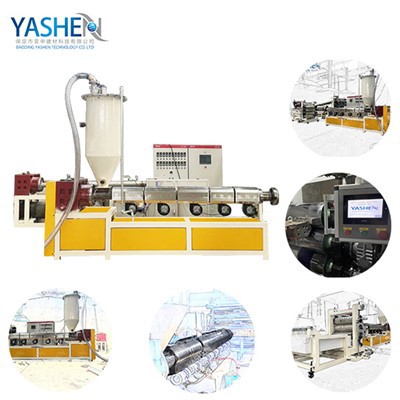
So, if you’re interested in learning more about our Teflon products or need help with choosing the right grade for your high – temperature application, just drop us a line. We’re here to make sure you get the best out of your Teflon investment.
PVC Sheet References:
- "Fluoropolymers Handbook" by David A. Caulk and William J. MacKnight
- Various industry research reports on the properties and applications of Teflon
- In – house technical data and testing results from Teflon production and application studies.
Baoding Yashen Technology Co., Ltd.
Baoding Yashen Technology Co., Ltd. is well-known as one of the leading teflon manufacturers and suppliers in China. If you’re going to buy bulk high quality teflon in stock, welcome to get free sample from our factory. For customized service, contact us now.
Address: Qingyuan Industrial Area, Baoding, Hebei, China.
E-mail: info@yashenchina.com
WebSite: https://www.yashenchina.com/
