Hey there, fellow air separation unit operators, plant managers, and everyone tinkering with cryo ASUs (that’s cryogenic air separation units for the uninitiated) – let’s talk reliability. I’ve been selling ASUs for over 12 years now, and hands down, the most common panic call I get isn’t “we need to ramp up production fast” – it’s “our ASU went down at 2 a.m. and we’re losing $10k an hour right now.” Cryo ASUs are these complex, energy-hungry behemoths that separate oxygen, nitrogen, argon straight from the air, and if they crash, it messes with downstream manufacturing – steel mills, chemical plants, even food and beverage facilities that use bulk O2 for packaging. No one wants that headache, and as an ASU supplier, my whole job is helping folks avoid that chaos, not just selling equipment. Type Of Air Separation Unit

First off, let’s get one thing straight: reliability in a cryo ASU isn’t just “doesn’t break” – it’s consistent, predictable output, no unplanned downtime, and hitting purity specs day in and day out. I’ve seen so many operators think “if it works now, it’ll work forever” – newsflash: these systems run 24/7, so small issues turn into big ones faster than you can say “distillation column flooding.” Let’s dive into the practical, field-tested fixes I’ve seen work, the kind that don’t require a PhD in thermodynamics to implement.
First, the stuff that’s easy to overlook because it’s not flashy: pre-treatment system maintenance. The air going into your ASU isn’t fresh mountain air – it’s loaded with dust, oil vapor, water, and even tiny particulate matter from the plant’s surroundings. That pre-treatment system – the air filters, the molecular sieve beds that strip out water and CO2 – is your first line of defense. I had a customer a few years back who skipped changing their pre-filter cartridges for 18 months. The particulate got past the filters, gunked up the sieve beds, and then migrated into the main heat exchangers. Result? A forced shutdown that cost them $250k in lost production. That’s a preventable mistake.
Here’s the call to action I always give my customers on pre-treatment: stop following the generic 6-month filter change schedule. Monitor it in real time. Most modern ASUs have pressure drop sensors on the pre-filters – if that number spikes 20% above baseline, don’t wait for the calendar, swap them out. Same goes for molecular sieves. We usually recommend a sieve change every 3-5 years, but if you’re operating in a high-pollution area (like near a steel mill or a construction site), cut that to 2-3. And don’t skip the sieve regeneration step during the cycle – if you under-regenerate, the sieve holds onto moisture, which eventually freezes in the main heat exchangers and plugs them up. I’ve seen that exact plug-up force a 72-hour shutdown for a customer who thought “regeneration is just a formality.”
Next, the distillation columns – the heart of the ASU, where all the O2, N2, argon get separated. These are tall, insulated towers, and they run under super low temperatures (think -180°C for the air) so any tiny leak or misalignment is a big deal. A lot of operators don’t think to monitor column vibration, but that’s a red flag. If column vibration is higher than it should be, that means something’s off – maybe liquid isn’t flowing right, or there’s a leak in the piping connected to the column. I had a customer last year who ignored a 10% spike in column vibration for a month. When they finally took it down, they found a corroded pipe joint that was leaking nitrogen – that vibration was the leak messing with the column’s internal flow. Fixing that vibration early would’ve cost $500; the shutdown to fix the leak cost $120k. Also, don’t skip the annual internal column inspections. Some folks only do that every 5 years, but if you’re running a high-load ASU (like over 1000 tons of O2 a day), annual checks are worth it. We’ve worked with customers who caught bent sieve trays in the column during an inspection – bent trays mess with separation, which lowers O2 purity and forces the unit to work harder, leading to more wear and tear.
Then there’s the refrigeration system, which keeps everything super cold. The expanders are the workhorses here – these are machines that spin at like 50,000 RPM to cool the air down to cryo temps. A lot of operators only check the expander oil levels during routine maintenance, but that’s not enough. We recommend installing vibration sensors on expanders too, and doing oil analysis every 3 months. Expander bearings wear out over time, and if the oil gets contaminated with metal shavings, it’ll seize the expander faster than you can flip an emergency shutdown switch. I had a customer who skipped oil analysis for a year – the expander seized mid-shift, and since it’s a critical part of keeping the ASU cold, the whole unit went down. The replacement part was $20k, but the downtime cost them $300k. On top of that, watch for expander inlet filter pressure drops. If that pressure creeps up, it means there’s particulate clogging the filter, which reduces the expander’s efficiency and can damage the blades. Swap those filters every year, even if the schedule says 2 – better safe than sorry.
Now, something that’s not technical but makes a huge difference: operator training and daily checks. I can’t tell you how many times I’ve visited a plant and found the operators just staring at the control screen, not actually walking the floor to do visual checks. Cryo ASUs have small things that go wrong before they show up on the SCADA system – a tiny frost line on a pipe, a pump making a weird noise, a pressure gauge that’s slightly off. I worked with a plant where the operators only did floor checks once a shift, but we trained them to do a 10-minute walk every 4 hours. The first week, they found a minor leak on a nitrogen line that the SCADA hadn’t flagged. Fixing that right away prevented a potential shutdown. Also, train your operators on emergency protocols properly. I’ve seen plants where operators hit the wrong button during a minor issue, turning it into a full shutdown. Do monthly drill runs – simulate a heat exchanger plug-up or an expander issue, so everyone knows exactly what to do, no panicking.
Wait, let’s not forget about routine maintenance that’s scheduled, but not too much. Some operators over-maintain, which is a waste of money, and some under-maintain, which is risky. Use predictive maintenance tools instead of just a fixed schedule. For example, use thermal imaging cameras to check pipe insulation – if insulation is damaged, cold air escapes, making the ASU work harder, and that extra strain leads to more wear. Also, keep spare parts on hand for the most common failure points: pre-filter cartridges, expander filters, sieve beds, and critical sensors. I’ve had a customer who waited 3 days for a replacement temperature sensor, and during that time, they had to run the ASU at a reduced load, losing $40k. Keep a stock of the 10 most commonly replaced parts on site – it’s a small cost compared to downtime.
Another big one: performance tracking. Every month, pull your ASU’s key metrics – O2 and N2 purity, energy consumption, unplanned downtime hours. If you notice energy consumption creeping up 5% over a few months, that’s a sign something’s wrong. Maybe the heat exchangers are getting plugged, or the sieve beds are losing efficiency. I had a customer who saw their energy use go up 7% and thought it was normal, but when we checked their sieve bed regeneration cycles, we found they were using too much steam, wasting energy and not fully regenerating the sieves. Fixing that dropped their energy use back to normal, saving them $80k a year.
Oh, and don’t sleep on the insulation. Cryo ASUs have miles of insulated piping and equipment, and over time, insulation gets damaged from vibration, water, or age. If cold air escapes, your ASU has to work harder to keep the system at the right temp, which puts more stress on all the components. We offer a quick insulation audit as part of our ASU support packages – it’s a free check for our customers, and we’ve found that 80% of plants have at least some damaged insulation that’s costing them energy and reliability.
Let’s get real for a second – I know every plant has a budget, and no one wants to drop $50k on sensors or new parts. But the math adds up: unplanned downtime costs way more than proactive maintenance. That’s why we design our ASUs with reliability at the core, but we also work with every customer, big or small, to tailor solutions to their budget. Whether you’re running a 50-ton O2 per day small ASU for a local metal shop, or a 1000-ton per day unit for a chemical plant, we’ve got tips that work.
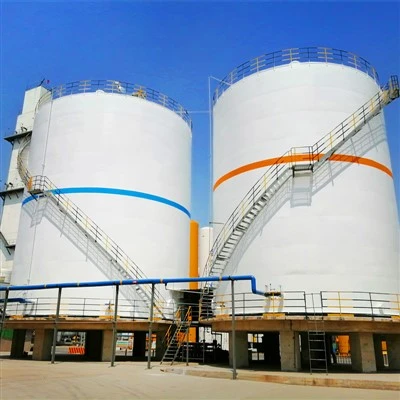
If your ASU’s reliability has been shaky lately, or you just want to make sure you’re doing everything right to avoid downtime, I’m here to help. We don’t do pushy sales – we’ve been in this game long enough to know that a happy customer is one that’s up and running, not just buying equipment. So hit us up to chat through your specific setup, see what small tweaks you can make to get your ASU running smoother, or even talk about upgrading parts if you’re ready. No hidden fees, no jargon, just real advice from someone who’s been on the ground with operators like you for years.
Specialty Gases References:
- Cryogenic Air Separation: Principles and Practice, 2nd Edition, Elsevier, 2017.
- Guideline for Improving Cryogenic Air Separation Unit Reliability, Air and Gas Association, 2021.
- Predictive Maintenance for Industrial Cryogenic Systems, Journal of Loss Prevention in the Process Industries, Vol. 38, 2015, pp. 272-278.
Xinxiang Jiale Intelligent Equipment Co., Ltd.
As one of the most professional air separation unit manufacturers and suppliers in China, we’re featured by quality products and good service. Please rest assured to buy durable air separation unit for sale here from our factory. We also accept customized orders.
Address: No.3913, 9th Floor, Unit 3, East Commercial and Office Complex, Baolong City Plaza, Hongqi District, Xinxiang City, Henan Province, China
E-mail: cc2397410@gmail.com
WebSite: https://www.jiale-asu.com/
