If you’ve ever stood in a manufacturing plant, a construction site, or a fluid processing facility, odds are you’ve seen thermoplastic hoses doing the heavy lifting behind the scenes. As a supplier of these hoses, I get asked one question more than any other: “Do they actually hold up under pressure, bending, and repeated use, or will they crack, kink, or fail when I need them most?” That question boils down to resilience—and it’s one I’ve spent years digging into, both in the lab and in conversations with customers who’ve put our hoses to the test in some of the toughest environments on Earth. Resilience, for those not deep in the materials space, isn’t just about bouncing back. It’s a material’s ability to absorb energy when deformed (like when you bend a hose, stretch it, or hit it with a sudden pressure spike) and then return to its original shape without permanent damage, cracks, or leaks. For a hose, that’s non-negotiable. A hose that loses its resilience after a few uses isn’t just a nuisance—it’s a safety hazard, a production stopper, and a costly expense. So let’s break this down, straight from the perspective of someone who sells these hoses day in and day out, not a textbook. Thermoplastic Hose
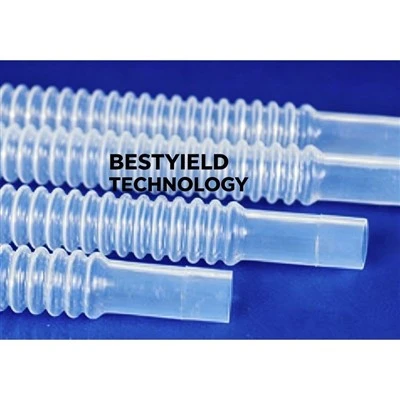
First, let’s talk about what makes thermoplastics different from other hose materials, because that’s the foundation of their resilience. Most common hoses come in two other main categories: rubber and metal. Rubber hoses, for all their flexibility, tend to degrade over time from exposure to UV light, chemicals, or extreme temperatures, and they often have a short service life. Metal hoses are tough, but they’re heavy, prone to rust if not coated, and they kink permanently if bent too sharply. Thermoplastics, by contrast, are polymers that can be melted and reformed when heated, which gives us a huge amount of control over their molecular structure—and that structure is everything when it comes to resilience.
Not all thermoplastics are created equal, though. The resilience of a thermoplastic hose depends almost entirely on the type of polymer it’s made from, how it’s formulated, and how it’s manufactured. At our facility, we work with three primary thermoplastics for our hoses: polyvinyl chloride (PVC), polyurethane (PU), and thermoplastic elastomers (TPEs). Each brings a different level of resilience to the table, and each is designed for specific use cases. Let’s start with TPEs, because they’re the gold standard for resilience in our product line. TPEs are a hybrid material—they have the elasticity of rubber and the processability of rigid thermoplastics. Their molecular structure has two distinct phases: hard blocks that give the hose strength, and soft blocks that give it flexibility. When you bend a TPE hose, those soft blocks stretch, then snap back into place once the pressure is released. I’ve had customers come back to us after a year of using our TPE hoses on a construction site, dragging them over concrete, driving over them with forklifts, and bending them around tight corners, and they’ll tell me the hoses look almost exactly the same as the day they bought them. That’s resilience in action.
Next is polyurethane (PU). PU is a bit stiffer than TPE, but it’s known for exceptional abrasion resistance and high tensile strength. It’s not quite as elastic as TPE, but it has great rebound properties—meaning it can recover from deformation faster than PVC, for example. We use PU hoses for applications where the hose is going to be dragged or run over frequently, like in agriculture for irrigation lines or in construction for concrete pumping. I had a farming customer last year who switched from rubber hoses to our PU lines because his old rubber hoses would crack after a couple of harvest seasons from being bent around his pivots and exposed to the sun. The PU hoses he’s using now? He told me he bent one into a full U-shape and left it that way for a month, and when he released it, it went right back to straight. That’s not just a fluke— that’s the material’s resilience doing its job.
Then there’s PVC, which is the most widely used thermoplastic hose material. PVC is affordable, lightweight, and flexible, but its resilience is a bit lower than TPE or PU. It’s prone to permanent bending if it’s left in a tight coil for long periods, especially in cold temperatures. That said, when formulated correctly (we add plasticizers and stabilizers to our PVC hoses to boost flexibility and durability), it’s still incredibly resilient for the right applications. We use PVC for things like garden hoses, air lines, and low-pressure water transfer, where the hoses don’t get bent or stressed as heavily. It’s not the best choice for extreme conditions, but for its intended use, it holds up far better than most people expect.
Now, let’s address the factors that can kill resilience, because resilience isn’t something that’s just built into a material—it can be damaged by how a hose is used and maintained. I see this all the time with customers who come to me with hoses that failed prematurely, and 9 times out of 10, it’s not the material’s fault—it’s how they’re using it. The biggest culprit is temperature. Thermoplastics have a temperature range where they perform best. If you use a TPE hose in temperatures below -20°F (-29°C), it gets stiff and brittle, and it loses its ability to rebound. Similarly, if you run a hose at temperatures above its rated maximum, it can soften, stretch out, and permanently deform. I always tell customers to check the temperature rating on their hose before they buy—using a hose outside its temperature range is like driving a car with summer tires in a snowstorm; it’s not the tire’s fault, it’s yours.
Another big one is pressure spikes and overloading. Resilience isn’t just about bending—it’s about withstanding sudden, repeated pressure changes. A hose that’s rated for 100 psi will perform well at 100 psi, but if you run it at 150 psi consistently, it will start to stretch, weaken, and lose its rebound. We test all our hoses for burst pressure and pressure cycling—we subject them to thousands of pressure spikes to make sure they can bounce back without damage. But if a customer ignores that rating, the hose will fail. I had a customer last year who was using our TPE hose for a hydraulic line and ran it at twice the rated pressure. The hose didn’t burst, but after a few months, it lost its resilience—each bend left a permanent kink, and it started leaking. It was a clear case of overloading, and it’s totally avoidable.
Then there’s chemical exposure. Thermoplastics are resistant to some chemicals, but not all. If you use a hose that’s designed for water to transfer oil or harsh chemicals, the material will break down, its molecular structure will be damaged, and it will lose resilience. PVC, for example, is great for water but breaks down in contact with gasoline. PU is resistant to many oils, but not strong acids. That’s why we always ask customers what they’re transferring, at what pressure, and in what environment before we recommend a hose—matching the material to the application is the biggest factor in ensuring resilience.
Now, let’s get to the numbers, because as a supplier, I don’t just talk about resilience—we back it up with testing. Our TPE hoses go through 10,000+ bend cycle tests at extreme temperatures to make sure they don’t crack or lose their shape. Our PU hoses are tested for abrasion resistance, and we’ve had some last over 5 years in industrial use where rubber hoses lasted 18 months. We also do long-term aging tests, leaving hoses in UV light for months to simulate outdoor use, and our best TPE hoses show less than 5% change in flexibility after 6 months of continuous sun exposure. That’s the science side, but the real proof is in the field. Last quarter, a construction company that builds pipelines for municipal water called us to say they’d been using our TPE hoses for 18 months, and they’d only had to replace 2 out of 500 lines. Their old rubber hoses were failing at a rate of 20% per year. That’s resilience making a real difference for their bottom line.
I know there’s still skepticism out there. Some people think thermoplastic hoses are just cheap replacements for rubber, and that they don’t have the same resilience. Let me set the record straight: for most applications, especially heavy-duty ones, thermoplastic hoses often have better resilience than rubber. Rubber tends to degrade over time from oxidation and chemical exposure, while advanced thermoplastics are formulated to resist those factors. The key is choosing the right material for your job, and buying from a supplier who knows how to formulate and manufacture hoses to maintain that resilience.
At the end of the day, resilience is what makes a hose reliable. When you’re running a production line, you can’t afford a hose that kinks, cracks, or leaks in the middle of a shift. When you’re in the middle of a construction project, you can’t stop to replace a hose because it couldn’t handle a bend. Thermoplastic hoses, when chosen and used correctly, have excellent resilience—way better than many people realize. They don’t just bounce back; they keep bouncing back, day after day, season after season.

If you’re in the market for hoses and want to stop dealing with frequent replacements, leaks, and downtime, we can help. We don’t sell one-size-fits-all hoses—we take the time to learn about your application, the fluids you’re transferring, the conditions you’re working in, and recommend the hose that will give you the resilience you need. Whether you need a lightweight PVC line for air tools, a heavy-duty PU hose for concrete pumping, or a flexible TPE hose for hydraulic applications, we have a product designed to hold up to the stress. Contact our team to discuss your requirements today, and we’ll send you samples and performance specs to make sure you get exactly what you need.
Pre-formed Rubber Hose References
ASTM D2671, Standard Test Method for Measuring the Flexibility of Thermoplastic Hose
ISO 188, Rubber, vulcanized or thermoplastic—Accelerated ageing and heat resistance tests
API 7K, Specification for Drilling and Production Hoisting Equipment (Hose Performance Testing Section)
BESTYIELD Technology (Huizhou) Co., Ltd.
BESTYIELD Technology (Huizhou) Co., Ltd. is one of the most professional thermoplastic hose manufacturers and suppliers in China, featured by quality products and good price. Please rest assured to buy durable thermoplastic hose made in China here and get quotation from our factory. Customized orders are welcome.
Address: Yinshan Industrial Zone, Liangjing Town, Huiyang District, Huizhou City, Guangdong Province
E-mail: rick@bestyield.net
WebSite: https://www.bestyield.org/
