If you’ve ever stepped inside a commercial building, a manufacturing plant, or a data center, you’ve relied on air circuit breakers (ACBs) without even knowing it. These heavy-duty electrical workhorses are the backbone of low-voltage power distribution systems, designed to protect circuits from overcurrent, short circuits, and other faults that can shut down operations or spark fires. But what many people don’t realize is that an ACB is only as reliable as the accessories paired with it. As someone who’s spent the last 12 years supplying ACBs and their complementary parts to facilities across North America, I’ve seen firsthand how the right accessories don’t just improve performance—they can mean the difference between hours of downtime and zero disruptions. Air Circuit Breakers

When I first started in this business, I thought ACBs were just a box that flipped when things went wrong. Early on, a client called me at 2 a.m. because their new manufacturing plant’s ACB had tripped unexpectedly, and they couldn’t figure out why. It turned out they’d skipped a basic accessory: a shunt trip. Without it, they had to climb into a narrow electrical vault in the dark to reset the breaker, delaying a critical production run by three hours. That night, I learned that accessories aren’t just add-ons—they’re essential to making ACBs functional for real-world use. Today, I want to walk you through the most common and useful ACB accessories, explain what they do, and share why choosing the right ones matters for your system.
Let’s start with the accessories that control how the breaker operates. First up is the shunt trip coil. This is a small electromagnetic device mounted on the breaker that allows you to remotely trigger a trip. If your system detects a fault—like an overheating cable or a power surge—through a building management system (BMS) or fire alarm, you can send a low-voltage signal to the shunt trip, and it will instantly trip the ACB. No need to run to the electrical room. I’ve supplied shunt trips to office buildings with automated fire suppression systems, and to mining operations where operators control power distribution from a central control room miles away. The key here is choosing the right voltage rating—most ACBs work with 24V DC or 120V AC shunt trips, so you have to match it to your control system to avoid compatibility issues.
Next in this category is the under voltage release (UVR). This accessory trips the ACB automatically when the input voltage drops below a safe threshold, usually 30-70% of the rated voltage. Why is that important? If voltage dips suddenly—like during a storm or a grid fluctuation—some equipment can keep running erratically, which can damage motors, pumps, or sensitive electronics. The UVR prevents that by cutting power before the voltage drops enough to cause harm. I remember a food processing plant client who installed UVRs after a series of unplanned voltage dips burned out three $20,000 mixing motors. Since they added the UVRs, they haven’t had a single incident related to voltage fluctuations. That’s the kind of return on investment that makes accessories worth every penny.
Moving beyond basic operation, we have auxiliary switches. These are simple contact devices that send signals to control panels or BMS to indicate the breaker’s status: open, closed, or tripped. Think of them as the ACB’s way of “talking” to your monitoring system. If an ACB trips unexpectedly, the auxiliary switch will alert your team immediately, instead of them noticing when a production line goes dead. I always recommend specifying at least two auxiliary switches per ACB: one for the main control system and a secondary for backup alarms. For facilities with 24/7 operations, this is non-negotiable. You don’t want to find out a breaker tripped when a night shift maintenance worker arrives at 7 a.m.
Now, let’s talk about accessories that improve safety and maintenance. Mechanical interlocks are a game-changer for facilities with multiple breakers in a panel or switchgear. An interlock physically or logically prevents two adjacent ACBs from being closed at the same time, which would create a dangerous phase-to-phase short circuit. For example, if you have a main ACB and a feeder ACB in a panel, an interlock ensures you can’t turn on the feeder unless the main is on, or vice versa—depending on the configuration. I’ve seen plants skip interlocks to save a few dollars, only to have an electrician accidentally close two breakers simultaneously, creating an arc flash that damaged equipment and injured a worker. Arc flash incidents are one of the leading causes of electrical workplace injuries, so mechanical interlocks aren’t just a convenience—they’re a safety requirement in many OSHA standards.
Another safety accessory is the lockout/tagout (LOTO) device. These let maintenance teams physically lock an ACB in the open position while they work on the circuit, preventing someone from accidentally closing it while they’re inside the panel. LOTO devices are required by OSHA for lockout/tagout procedures, which protect workers from shock or arc flash during maintenance. When supplying ACBs, I always include a LOTO kit with every unit sold, because I’ve seen too many clients cut corners here, putting their team at risk. It’s a small part, but it’s critical for compliance and worker safety.
Maintenance accessories are also often overlooked, but they can save you time and money over the life of your ACB. One of the most useful is a test plug. A test plug lets you safely disconnect the trip unit from the breaker without de-energizing the main circuit, so you can test the overcurrent and short circuit functions of the breaker without shutting down the entire system. For facilities that can’t afford downtime—like data centers or hospitals—this is invaluable. Instead of scheduling a full shutdown to test breakers, you can do it during routine maintenance windows without impacting operations. I once worked with a data center that tested all their ACBs using test plugs during off-peak hours, cutting maintenance time by 60% and avoiding any service disruptions for their clients.
Thermal imaging sensors are another modern accessory that’s become popular in the last decade. These small sensors mount on the ACB’s bus bars and contacts, and they continuously monitor temperature. Over time, loose connections or corrosion can cause resistance, leading to overheating, which is a common cause of ACB failures and fires. The thermal sensor sends real-time temperature data to your BMS, alerting you before a problem becomes critical. I’ve supplied these to warehouses with high-load ACBs that run 24 hours a day, and clients have told me they’ve caught loose connections that would have caused a catastrophic failure before it happened. It’s a predictive maintenance tool that pays for itself by preventing unplanned downtime.
Now, let’s talk about accessories that make installation and operation easier. A common one is the rotary operator. If your ACB is mounted in a hard-to-reach cabinet or panel, a rotary operator lets you open and close the breaker using a handle on the outside of the cabinet, instead of reaching inside. This is especially useful for high-voltage ACBs or breakers installed in tall switchgear rooms. I’ve also supplied rotary operators with padlock options, so you can lock the breaker in the open or closed position for extra security.
For outdoor applications, like ACBs installed in outdoor switchgear or temporary power units, weatherproof enclosures are a must. These enclosures protect the breaker and its accessories from rain, dust, extreme temperatures, and UV damage. When supplying outdoor ACBs, I always recommend matching the enclosure’s IP rating to the environment: IP54 for dusty, semi-exposed areas, IP65 for areas with direct rain or snow. I once had a client in Alberta, Canada, install an outdoor ACB without a proper enclosure, and within a year, freezing temperatures and snow had corroded the terminals, causing a trip that shut down their construction site for two days. That mistake cost them far more than the enclosure would have.
Finally, let’s not forget the trip unit itself—wait, is that an accessory? Yes, in many cases. ACBs come with a base, and the trip unit is a modular accessory that you can swap out to adjust the breaker’s protection settings. Trip units are categorized by their functionality: thermal-magnetic, which is basic and uses heat and magnetic forces to trigger trips; electronic, which uses microprocessors to provide precise overcurrent, short circuit, and ground fault protection; and digital, which connects to communication networks for monitoring and control. If your facility’s power needs change—like adding more equipment or expanding your operations—you can just upgrade the trip unit instead of replacing the entire ACB, which saves thousands of dollars. I’ve helped clients upgrade from basic thermal-magnetic trip units to digital ones when they added solar arrays to their facilities, ensuring the ACB could handle the variable power flow from solar panels.
Now, here’s the thing: not all accessories work with every ACB. When you’re selecting accessories, you have to make sure they’re compatible with your breaker’s voltage rating, current frame, and manufacturer specifications. That’s why working with a supplier who knows ACBs is key. I’ve had clients come to me with third-party accessories they bought online that didn’t fit their breaker, leaving them stuck with unusable parts. As someone who’s been in this industry for years, I test every accessory we supply to ensure it works with the ACBs we carry, and I help clients match the right accessories to their specific application, not just sell them the cheapest option.
At the end of the day, air circuit breakers are critical for keeping power systems safe and reliable, but they’re only part of the equation. The right accessories turn a basic breaker into a smart, safe, and efficient component of your power distribution system. Whether you’re looking to control your breaker remotely, improve safety for your team, or reduce maintenance downtime, there’s an accessory that fits your needs.
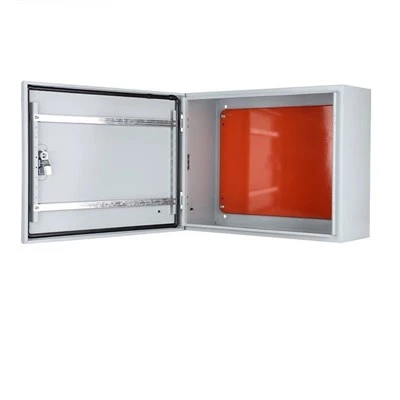
If you’re upgrading your ACB system, adding accessories to new breakers, or having trouble with existing parts, I’m here to help. We work with facilities of all sizes, from small retail stores to large manufacturing plants and data centers, to find the right ACB accessories that fit your budget and your needs. Reach out to our team to discuss your requirements, and we’ll provide you with expert advice and custom solutions for your power distribution system.
Distribution Box References
- National Fire Protection Association. (2021). NFPA 70: National Electrical Code. Quincy, MA: National Fire Protection Association.
- Occupational Safety and Health Administration. (2022). Electrical Safety Standards in the General Industry. Washington, DC: U.S. Department of Labor.
- International Electrotechnical Commission. (2019). IEC 60947-2: Low-voltage switchgear and controlgear – Part 2: Circuit-breakers. Geneva, Switzerland: International Electrotechnical Commission.
Wenzhou Lanen Electrical Co., Ltd.
Wenzhou Lanen Electrical Co., Ltd. is one of the most professional air circuit breakers manufacturers and suppliers in China, also supports customized service with low price. Please feel free to buy CE approved air circuit breakers made in China here from our factory. Contact us for more discount information.
Address: Zhiguang Liushi Town Yueqing City Wenzhou City Zhejiang Province
E-mail: lanen@luyele.cn
WebSite: https://www.lanenelectrical.com/
