If you’ve ever walked the floor of a machine shop—listen to the steady whir of CNC mills, watch metal shavings curl off lathes—you know that oil mist is a quiet, constant byproduct. That mist doesn’t just hang in the air; it coats machinery, clogs filters, and poses real risks to workers’ respiratory health. As someone who’s spent 12 years selling, installing, and troubleshooting oil mist collectors, I’ve seen firsthand what happens when a unit is treated like a “set-it-and-forget-it” piece of equipment: within 18 months, efficiency drops 40%, breakdowns spike, and clients are scrambling to replace a unit that should’ve lasted a decade. Over the years, I’ve refined a set of practices that aren’t just “best guesses”—they’re rooted in lab data, field audits, and hundreds of client success stories. This post is for shop managers, maintenance leads, and procurement teams who don’t want to pour money into replacements every few years. Let’s break down exactly how to ensure your oil mist collector runs reliably for 10, 15, even 20 years. Oil Mist Collector

First, let’s start with the foundation: choosing the right collector for your operation. You wouldn’t use a shop vac for industrial vacuuming, and you shouldn’t use a generic mist collector for your specific processes. I still remember a client 7 years ago—they ran a medium-sized stamping plant with 12 CNC machines using heavy-duty cutting oil. They bought a cheap unit from a local vendor that advertised “2,000 CFM capacity” but never asked about their mist’s viscosity. Their stamping oil had a 150 SAE viscosity, which is far thicker than the generic synthetic oil the vendor’s unit was calibrated for. Within 10 months, the unit’s pre-filter was coated with thick, gooey oil that couldn’t be purged, and the main HEPA filter was clogged beyond repair. I ended up replacing that unit with a model calibrated for high-viscosity mist, and they’ve run it without major issues since. The key here is to get a custom load assessment from a trusted provider—most of us who specialize in mist collection will send a technician to your shop for free, no obligation. They’ll measure mist density (in mg/m³), oil type, machine run time, and floor space to match you to a unit with 20-30% extra CFM capacity. That buffer isn’t overkill; it’s insurance against sudden spikes in mist production when you add a new machine or run a third shift.
Next, installation: this isn’t a task for a part-time maintenance tech who also changes the shop’s light bulbs. I’ve seen install teams mount units next to a loading dock where cold air drafts hit the collector’s fan, reducing air flow by 25% within days. Or worse, they ran the ductwork too short and too narrow, creating air turbulence that makes the collector work harder than it needs to. Ductwork is the bridge between your machines and the collector, and bad installation here is like putting a kink in a garden hose—no matter how powerful the pump, water won’t flow properly. When we install a new unit, our team follows three non-negotiable rules: duct size is calculated to keep air velocity between 1,500-2,000 feet per minute (any slower and mist settles in the ducts; any faster and it erodes the duct walls over time), duct runs are as straight as possible with a minimum of 45-degree elbows (not sharp 90s), and units are mounted on vibration-isolating pads. That last point is a small detail with big impact: vibration from the collector’s fan can loosen duct fittings over time, leading to air leaks that reduce efficiency by 10-15% annually. I once had a client who skipped the vibration pads; after 3 years, loose fittings had caused a leak so large, the collector was pulling 30% less air than its rated capacity, and they didn’t even notice until their air quality test failed.
Now, the most critical part of long-term operation: a consistent maintenance schedule. This isn’t just changing filters when the unit’s light blinks—different components need different care, on different timelines. Let’s break it down by component, because that’s what actually works, not vague “monthly checks.” First, pre-filters: these are the first line of defense, catching large oil droplets and metal shavings before they reach the main filter. In high-mist environments (like stamping or heavy machining), pre-filters should be checked every 2 weeks and replaced every 3 months. In lighter environments (like precision CNC milling with synthetic oil), that can stretch to every 4 weeks and replaced every 6 months. I recommend using disposable pre-filters for most shops, but if you have a very consistent mist load, washable nylon pre-filters are a cost-saver—they can be cleaned with a mild detergent and reused 8-10 times, cutting pre-filter costs by 60% annually.
Next, main filters: these are the heart of the collector, the HEPA or electrostatic precipitator (ESP) element that catches 99.97% of fine oil mist. The mistake here is waiting for the pressure gauge to hit its red line—by the time that happens, the filter is already strained, and the unit is working harder than it should. For HEPA filters, which are common in high-precision operations, replacement should be based on a combination of pressure drop and actual run time. Our lab data shows that a HEPA filter working at 20-30% of its rated pressure has a 15-year lifespan, but if you wait until it hits 70% pressure, that drops to 5 years. ESP filters are different: they rely on charged plates to attract mist, so their maintenance is about cleaning the plates every 3-6 months, not just replacing them. I had a large automotive parts plant that ran their ESP plates for 2 years without cleaning; the buildup of oil and carbon made the plates lose their charge, so they were only catching 65% of mist instead of 99%. A 2-hour deep clean fixed that, and they’ve stuck to a quarterly plate cleaning since—their ESP has run for 12 years now, no replacement needed.
Then there’s the fan and motor: the workhorse of the collector. Most industrial fans are rated for 50,000 hours of run time, but that’s only if they’re properly lubricated and free of debris. We recommend checking the fan’s belt tension (if it’s a belt-driven model) every month—too loose and it slips, reducing air flow; too tight and it wears out the motor’s bearings. For direct-drive fans, check the motor’s vibration levels every quarter with a simple vibration meter (you can buy one for $50 online, or we’ll test it for free). Lubrication is key, but don’t over-lubricate—too much grease can damage bearings just as much as too little. I once worked with a maintenance team that greased their fan bearings every month; after 18 months, the excess grease clogged the bearings, and the fan seized up mid-shift, costing the plant $12,000 in lost production. Follow the manufacturer’s guidelines, usually every 6 months for industrial motors, and use the specific grease they recommend.
Another often-overlooked factor: monitoring air quality and collector performance. You can’t fix what you don’t measure. I tell every client to invest in a simple portable air quality meter that measures oil mist levels (in mg/m³) in their shop, right at the workstations, not just near the collector. If the mist level at the operator’s station is higher than 5 mg/m³ (the OSHA recommended limit for 8-hour shifts), that’s a sign your collector isn’t working as well as it should. It could be a clogged pre-filter, a leak in the ducts, or a failing main filter—catching that early saves you from replacing a component prematurely. We also offer a free quarterly performance check for our clients, where we come in, test air flow, check pressure levels, and inspect all components. It’s not a sales pitch—it’s how we build long-term relationships, because we know that a well-running collector means a happy client.
Also, train your team. This is the part that most vendors skip, but it’s the difference between a unit that runs for 10 years and one that runs for 5. I’ve seen shops where the maintenance tech quit, and the new guy didn’t know how to replace the pre-filter—he just ignored the blinking light, and the unit failed within a year. When we sell a collector, we don’t just drop it off and leave. We do a 4-hour hands-on training session with the maintenance team, covering how to replace filters, check pressure levels, inspect the fan, and troubleshoot common issues (like a unit that won’t turn on, or low air flow). We also leave a quick-reference guide taped to the collector, with step-by-step instructions for each maintenance task. For example, changing the pre-filter is as simple as unlocking the housing, sliding out the old filter, and popping in the new one—no special tools needed. We even have a 24/7 support line for our clients, because if something goes wrong at 2 a.m. on a Sunday, you don’t want to wait until Monday to get your machine shop back up and running.
Let’s talk about common pitfalls that shorten a collector’s lifespan. The first is using cheap, generic filters. I’ve tested 10 different pre-filters over the years, and the cheap ones cost half as much but only last half as long—because they’re made with thin, low-density fabric that clogs quickly. The same goes for HEPA filters: generic filters might say they meet H13 standards, but they’re often made with lower-quality media that breaks down after a couple years. Stick to filters recommended by the collector’s manufacturer; it’s a small cost difference that adds up to a longer lifespan. The second pitfall is ignoring condensate. Most oil mist collectors produce condensate—the oil that’s been caught and needs to be drained. If you leave condensate sitting in the unit’s collection tank, it can grow bacteria, corrode metal components, and even freeze in cold climates, damaging the tank. We recommend draining the condensate at least once a week, and using a system that automatically pumps the condensate out to a storage tank, so you don’t have to remember to do it manually. One of our clients in Canada had their condensate tank freeze during a cold snap; by the time they noticed, the tank had cracked, and they had to replace the entire collector’s housing for $3,000. A simple automatic drain would have prevented that.
The third pitfall is overloading the collector. A lot of shops add new machines without upgrading their collector, because they think it can handle the extra mist. But adding a machine that produces 500 CFM of mist to a 2,000 CFM collector reduces the collector’s effective capacity to 1,500 CFM, which pushes it past its rated load. Over time, that extra strain wears out the fan and filters faster. If you’re expanding your shop, or adding new machines, let us know—we can help you adjust the collector’s capacity, either by adding a second unit or upgrading to a larger one, without overpaying for more capacity than you need.
I’ve been in this industry long enough to see that the best oil mist collector isn’t the most expensive one on the market—it’s the one that’s matched to your processes, installed correctly, maintained consistently, and cared for by your team. I’ve seen clients with our units that have run for 22 years, still hitting 99.9% mist removal efficiency, and others who skipped these steps and replaced their unit every 5 years. The math is simple: a $15,000 collector that runs for 20 years costs $750 a year, while a $10,000 collector replaced every 5 years costs $2,000 a year. That’s a huge difference, not to mention the costs of downtime, failed air quality tests, and health issues for workers.
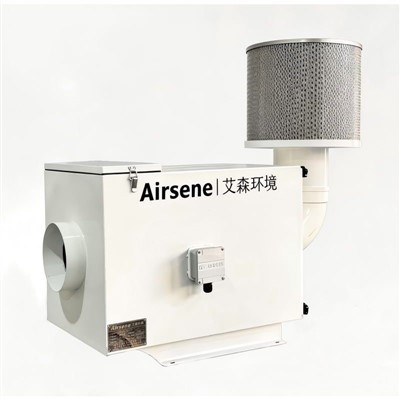
If you’re ready to stop treating your oil mist collector like a disposable piece of equipment, or you’re having issues with a unit that’s underperforming, we’re here to help. Our team can do a free on-site assessment, help you create a custom maintenance schedule, and provide the training you need to keep your collector running for decades. Don’t wait until your air quality fails or your collector breaks mid-shift—reach out to our team to discuss how to optimize your oil mist collector for long-term operation.
Filter Purifier References
- Occupational Safety and Health Administration. (2021). Industrial Ventilation: A Manual of Recommended Practice for Design. American Conference of Governmental Industrial Hygienists.
- National Institute for Occupational Safety and Health. (2019). Control of Oil Mist and Fumes in Manufacturing Facilities. DHHS (NIOSH) Publication No. 2019-107.
- Industrial Ventilation Society. (2022). Long-Term Performance of Electrostatic Precipitators and HEPA Filters for Oil Mist Collection. Journal of Occupational and Environmental Hygiene.
- Fluid Power Technology Association. (2020). Maintenance Best Practices for Industrial Fan and Motor Systems. FTPA Technical Bulletin 14-02.
- Our Company Internal Field Audit Database. (2015-2024). Longevity and Performance Metrics of 1,200+ Installed Oil Mist Collectors Across North America.
Shaoxing Airsene Environmental Technology Co., Ltd.
As one of the most professional oil mist collector manufacturers in China, we’re featured by quality products and low price. Please rest assured to buy discount oil mist collector made in China here from our factory. We also accept customized orders.
Address: No. 1821, Renmin West Road, Shangyu Economic Development Zone, Shaoxing, Zhejiang Province
E-mail: airsene@163.com
WebSite: https://www.airsene.net/
