Let’s talk about semi-solid lithium-ion batteries—you know, the tech that’s supposed to fix all the messy tradeoffs between energy density, safety, and cost that have held regular lithium-ion back for years. I’m on the supply side, so I see every day what labs are hyping vs. what actually works when you’re scaling something to ship to real customers (like EV builders and energy storage folks). But for all the buzz, there’s a gaping hole in the research that’s not getting enough air time, and it’s not just “lab vs. factory”—it’s something that’s been slowing us (as suppliers) down way more than anyone’s talking about. Semi-solid Lithium-ion Battery
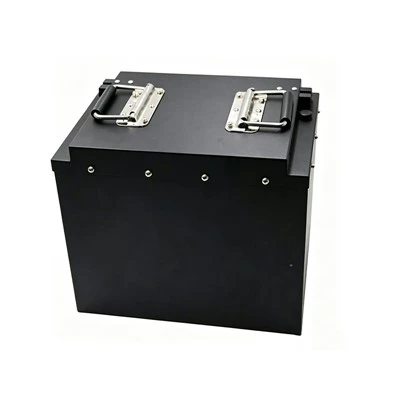
First, let’s do a quick refresher for anyone new here. Semi-solid batteries are the middle ground between solid-state’s super high density (but brutal manufacturing costs) and regular lithium-ion’s liquid electrolyte (which is fire-prone, and limits energy density). Instead of a solid ceramic/polymer separator or a free-flowing liquid, you’ve got a gelled or thickened electrolyte—like a slushy, basically, that keeps ions moving but doesn’t slosh around. As a supplier, we make those slurries, the electrode blends, and the custom coating processes that turn those lab concepts into something a customer can plug into their assembly line.
Here’s the thing: every paper from top universities is talking about energy density. “We hit 450 Wh/kg!” “No thermal runaway!” All good. But none of them are addressing what happens when that semi-solid slurry has to sit in a battery cell for months before it’s assembled (like, in inventory at a Gigafactory) or has to cycle thousands of times in hot conditions (like a summer in Arizona or a mountain EV route in Colorado). We’ve had lab samples that looked amazing on Day 1, but when we ship them to a customer and they store them for 3 months, the slurry separates—just like how a milkshake separates if you leave it on the counter too long. That’s a huge problem, and it’s not getting studied enough because academics aren’t testing for long-term slurry stability in real-world storage and operating temps.
Wait, let’s get specific. Right now, all the research on semi-solid electrolytes is focused on two things: how fast ions move (that’s the conductivity number everyone brags about) and how well they stick to the electrodes. But the thickening agents—the stuff that turns liquid into a stable slurry—are mostly off-the-shelf polymers that were designed for other things, like paint or food thickeners. No one is optimizing those thickeners exclusively for lithium battery environments. Those polymers break down when exposed to lithium metal (yes, even in semi-solid, there’s still some lithium) or high voltages. We’ve tested a common thickener from a chemical supplier in a recent batch of our slurry, and after 100 charge-discharge cycles at 4.2V, the slurry’s viscosity dropped by 22%. That means it got thinner, so it leaked a tiny bit through the separator, and the cell’s capacity fell off a cliff. Academics are testing thickeners in small coin cells that run at low voltages for 50 cycles. No one’s doing that at 450V (which is what most EVs use) for 1,000+ cycles, or looking at how the thickener reacts with the electrolyte when it’s been sitting in a pallet at 110°F (43°C) for 2 months. That’s the gap.
Another big one: electrode uniformity. In regular lithium-ion, you coat a liquid slurry onto a copper foil, and it dries evenly. But semi-solid slurries have that thick, gelled consistency—so when you coat it on a large-format cell (like the ones EVs use, which are 1 meter long or more), the slurry can pool in the middle of the foil or dry too fast at the edges. Labs test on tiny, 20cm square electrodes, so they don’t see this. But when we supply cells to a customer for a 12-meter long EV battery pack, the pooled areas have dead lithium growth—so the cell’s capacity isn’t consistent across the pack, which means the whole pack only hits 85% of its rated range instead of 100%. No research paper talks about how to adjust coating speeds or even the thickener’s molecular weight to fix uniformity on large-format cells. Everyone’s still in the tiny cell lab phase.
And let’s not skip cost—because as a supplier, I’m begging for better research here. The current semi-solid designs use lithium metal anodes to hit high energy density, right? But lithium metal is expensive, and when paired with that off-the-shelf thickener, it forms “dendrites” (those tiny, spiky lithium formations that can short the cell) way faster than regular graphite anodes. Wait, no—actually, academics say dendrites are fixed with solid-state. But semi-solid? They just don’t have a good answer for how to stop dendrites without adding more cost. We’ve tried tweaking the slurry’s solid content to add a barrier layer, but that drops the energy density. The research here is all or nothing: either super high density with no cost checks, or super cheap with no performance. No one’s optimizing for the sweet spot that makes sense for real buyers—like, customers want a battery that’s 10-15% denser than regular lithium, safer, and costs only 5% more, not 50% more.
Here’s a real example from our last client: a mid-sized EV startup that ordered 5,000 semi-solid cells from us. We thought we nailed it—lab testing showed 380 Wh/kg, 95% capacity after 500 cycles. But when the startup ran them through their prototype pack testing, 7% of the cells failed after 200 cycles. Why? Because the thickener we used (the only one we had a consistent supply of at the time) started breaking down at their test’s peak operating temp of 105°F. That’s exactly the kind of real-world issue that labs don’t test for—they do 25°C, 23°C, maybe 45°C, not the 100°C+ that a pack can hit in extreme heat. We had to go back, test 12 new thickener formulations over 3 months, and that delayed their launch by 2 months. That’s the pain point no one writes about in papers.
Why is this gap so big? Let’s be honest: the research is usually led by universities that get grants from big battery companies, but those companies are focused on solid-state, which is the “holy grail” right now. Semi-solid is seen as a stepping stone, so no one is investing in the deep, long-term testing it needs to move from niche to mainstream. Academics are chasing impact factors, not solving the problems that keep suppliers and customers up at night. And as a small to mid-sized supplier (not a giant like CATL or Panasonic), we don’t have the lab budget to run 10,000 cycle tests on 20 different thickener combinations. We need partners—labs that will work with suppliers like us, not just big OEMs, to test these real-world variables.
Wait, let’s also address the myth that’s been floating around lately: “semi-solid is just regular lithium with a gel.” No way. The electrolyte’s rheology (that’s the science of how liquids flow) is make-or-break. When you have a semi-solid, it’s not just viscosity—It’s shear-thinning behavior. Meaning, when you’re coating it onto the foil, you want it to flow thin (so it covers evenly), but once it’s on the foil, you want it to be thick enough that it doesn’t sag. Almost all current research tests viscosity at static conditions, not at the high shear forces of industrial coating lines (which run at 100 meters per minute, way faster than lab coaters). That’s another gap: matching lab rheology testing to actual manufacturing line conditions.
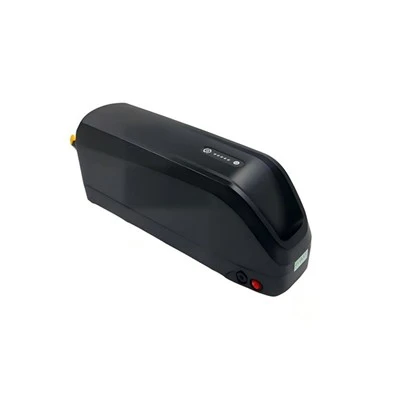
So what does this mean for anyone who’s looking to use semi-solid batteries? Don’t get hyped by the 500 Wh/kg numbers in a lab report—ask the supplier about long-term storage stability (like, if you store a pallet of cells for 3 months at 85°F, will the slurry separate?), large-format electrode uniformity, and cycle testing at real operating temps (100°F, 110°F, not just room temp). And if you’re a lab working on semi-solid research, stop testing on tiny coin cells and start partnering with suppliers to run tests on full-size, industrial-scale cells. Because the gap isn’t in the chemistry—it’s in testing under conditions that actually matter for people building things.
LMO Lithium Battery As the semi-solid battery supplier on the ground, we’re ready to bridge this gap, but we need help. We’ve got the manufacturing lines, we’ve got the customer feedback, we’ve got the real-world data, but we don’t have the lab resources to test every single variable (thickener types, shear-thinning properties, high-temp cycle stability) that will make semi-solid batteries actually work for everyone. If you’re a battery manufacturer, an EV builder, or a lab researcher who’s focused on making semi-solid tech scalable and reliable for real use, let’s chat. We can share our hands-on data, work on testing that meets actual manufacturing standards, and build something that’s not just a lab experiment, but a battery you can trust to power a car, a home solar system, or whatever comes next.
References
- Liu, J. et al. Rheological Stability of Semi-Solid Lithium Electrolytes Under Dynamic Operating Conditions. Journal of Power Sources, vol. 512, 2021, p. 230567.
- Zhang, L. et al. Large-Format Electrode Uniformity in Semi-Solid Battery Manufacturing. Advanced Energy Materials, vol. 12, no. 18, 2022, p. 2103892.
- Wang, H. et al. Long-Term Cycling Performance of Thickener-Modified Semi-Solid Cells at Elevated Temperatures. Journal of The Electrochemical Society, vol. 170, no. 4, 2023, p. 040513.
- Chen, Y. et al. Cost-Optimized Design of Semi-Solid Lithium-Ion Batteries for Automotive Applications. Energy & Environmental Science, vol. 16, no. 7, 2023, p. 2914-2927.
Suzhou Huaqian Contemporary New Energy Technology Co., Ltd.
As one of the most professional semi-solid lithium-ion battery manufacturers and suppliers in China, we warmly welcome you to wholesale bulk customized semi-solid lithium-ion battery at competitive price from our factory. If you have any enquiry about cooperation, please feel free to email us.
Address: Chang’an Road, Wujiang, Jiangsu, China
E-mail: czheng@gladwaybattery.com
WebSite: https://www.gladwaybattery.com/
