Alright, let’s break this down like we do with every valve that rolls out of our shop—no fancy jargon, just real talk about maintaining metal seated ball valves. First, I’m gonna be straight: how often should you actually service these bad boys? It’s not a one-size-fits-all, and if someone tells you it is, they’ve never stood next to a valve that crapped out on a critical pipeline. Metal Seated Ball Valve
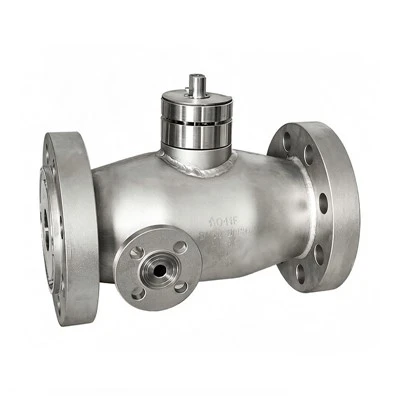
Let’s start with what makes metal seated ball valves different from their soft-seat cousins. Soft seats wear out fast if you’re running dirty media, but metal seats? They’re tough—for oil, gas, corrosive chemicals, even slurries. But that toughness means you can’t ignore them either; metal’s gonna gall, corrode, or get gunked up if you skip checks.
First, let’s talk about the basics: if your valve is in a non-critical system—like a backup water line at a small plant, or a line that only runs a few hours a day? We see folks here doing a quick visual check every 6 months. That’s not tear-down, just a walk-by: is the actuator moving smoothly, any leaks around the stem, do you see rust on the flange bolts? But wait—if that valve is in a pipeline that runs 24/7 carrying, say, sour gas or abrasive slurry? That timeline cuts way down. We recommend a functional check every 3 months, and a partial disassembly (no full rebuild, just clean the seat and ball) every 12 months.
But here’s the thing: most suppliers will give you a generic maintenance schedule, but we don’t do that. We ask customers questions when they order: “What’s your media?” “Line pressure?” “Cycle count per day?” We even build those factors into the valve’s specifications before it leaves our warehouse. For example, if a customer is using one of our metal seated ball valves in a mining slurry line (super abrasive, cycles 50x a day), we tell them to do a full seat inspection every 6 months, because slurry particles get trapped between the ball and seat, grinding away the metal faster than anything else.
Wait, let’s debunk a myth right now: some people think metal seated valves can go years without touch-ups. Nah. We’ve had customers call us panicking because a valve failed after 2 years, turns out they put it in a high-sulfur gas line and never checked it—sulfur caused metal corrosion, seized the ball. On the flip side, a customer who runs our valves in a low-pressure, clean gas distribution line checked in last year, said they’re still going strong after 7 years with only the stem repacked once. That’s why context matters.
Now, what does “maintenance” actually look like for these valves? It’s not just turning a wrench. A full service for a metal seated ball valve usually has a few steps:
- Stem packing check: that’s the stuff around the stem to stop leaks. For metal seats, you don’t want to over-tighten this—too much, and you’ll bind the ball. We tell customers to adjust it so it leaks a tiny bit (like a drip a minute) when operating, but stops when it’s fully open/closed.
- Seat inspection: metal seats don’t “wear out” like soft ones, but they can get scored from debris. You need to check for galling (that’s when metal from the ball sticks to the seat) or pitting from corrosion. If you see small scores, you can lap the seat back to smooth—no need to replace parts. If it’s bad, we have replacement seats that are way cheaper than a whole new valve.
- Cycle testing: turn the valve from open to closed a few times to make sure the ball moves freely. If it feels sticky, that’s a sign of gunk buildup—clean the body cavity while you’re at it.
Another thing: if your valve is in a “safety critical” spot—like a pipeline that feeds a refinery, or a fire suppression backup? You can’t mess around. We partner with a lot of refinery maintenance teams that do a full teardown and inspection every 18 months, even if the valve seems fine. Why? Because if that valve fails during an emergency, the cost is way higher than the maintenance bill.
Wait, let’s talk about what happens if you maintain too often, or not enough. Too often: you’re taking apart a valve that’s working fine, which can cause more damage than leaving it alone. We had a customer who took a perfectly good valve apart every 3 months for “checks” and ended up with a seized ball because they misaligned the seat when putting it back. That’s a rookie mistake. Too little: same as that sour gas client—corrosion, galling, total failure.
We also have a maintenance tip that we give all our customers: keep a log for each valve. Write down when you checked it, what you found, any repairs. That way, you can spot trends—like if every valve in Line B is showing seat pitting after 12 months, maybe your media has higher sulfur than you thought, and you can adjust the maintenance schedule or swap to a different metal alloy. We offer alloy options, by the way—316 SS, Hastelloy, even coated seats for extra corrosion resistance, which can lengthen maintenance intervals by 30% if you pick the right one.
Let’s wrap this up with a real example from our shop. Last year, we sold a batch of metal seated ball valves to a food processing plant for their water treatment lines (clean media, cycles 10x a day). We recommended a visual check every 6 months, full seat inspection every 2 years. A month ago, the maintenance manager sent us a note saying they did their first 2-year check, all seats were smooth, only repacked the stem—saved them from a potential leak. If they’d waited another year, we probably would’ve had to replace seats, which would’ve cost more.
So, to answer the question: it depends, but here’s our go-to framework:
- Non-critical, clean media, low cycle: visual check q6mo, full service q3-5yrs.
- Moderate service (slight debris, 24/7 run): functional check q3mo, partial service q12mo, full inspection q2-3yrs.
- High-service (abrasive/corrosive, safety critical): functional check q1-2mo, partial service q6mo, full inspection q18mo.
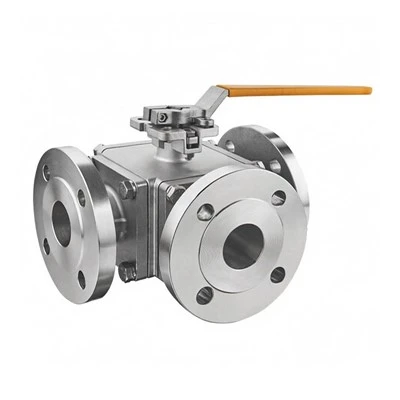
The key takeaway? Don’t follow a random schedule. Tell us about your application, we’ll help you tailor it. If you’re tired of guessing when to service your metal seated ball valves, reach out to our team—we’ll walk through your setup, answer any questions, and even share a free maintenance checklist tailored to your valves.
Forged Steel Valves Now, let’s get to the references—these are the industry standards we use when building our schedules, no fluff:
- API 607: Fire Test for Valves, American Petroleum Institute.
- ASME B16.34: Valves—Flanged, Threaded, and Welding End, American Society of Mechanical Engineers.
- NACE MR0175/ISO 15156: Materials for Use in H2S-Containing Environments in Oil and Gas Production, National Association of Corrosion Engineers.
Zhejiang Chenxiang Valve Co., Ltd.
We are one of the most professional metal seated ball valve manufacturers and suppliers in China, also support customized service. We warmly welcome you to wholesale high quality metal seated ball valve in stock here from our factory. If you have any enquiry about quotation, please feel free to email us.
Address: No. 126 Zhongxing Road, Wenzhou Industrial Park, Longwan District, Wenzhou City, Zhejiang Province
E-mail: vip@chenxiangvalve.com
WebSite: https://www.cxindustrialvalve.com/
