Hey there, let’s cut to the chase—if you’re deep in the weeds of starting or scaling a WPC door business, one question’s probably keeping you up at 2 a.m.: What’s the absolute minimum production capacity I actually need to turn a profit? I’ve been in the WPC door machine game for over a decade, working with small startups and mid-sized ops across North America and Europe, and I can tell you it’s not as black-and-white as some industry blogs make it sound. There’s no one-size-fits-all number, but I’ll break it down like we’re chatting over coffee—no jargon, no fluff, just the real math that makes this business tick. WPC Door Machine
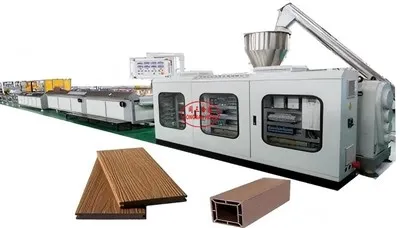
First, let’s get on the same page about what WPC doors even are, because if you’re here, you probably know, but a quick refresher: Wood-Plastic Composite doors are made from a mix of plastic (usually recycled HDPE or PVC), wood flour, and additives. They’re water-resistant, low-maintenance, way more durable than solid wood for coastal or high-humidity areas, and they’ve blown up in popularity over the last five years. The demand’s real—new construction, home renovations, even commercial properties love ‘em. But here’s the thing: WPC door production isn’t like making wooden doors. It’s automated, uses specialized extrusion and molding machines, and your capacity is directly tied to how much you can run that equipment without wasting money.
Let’s start with the basic cost breakdown, because profit’s all about covering your costs and then some. For a small WPC door operation—say, a team of 5 to 8 people—your fixed costs (the stuff that doesn’t change how many doors you make) are the big ones here. That includes your rent for a workshop, machine loan payments, utilities (WPC production uses a lot of electricity to melt and mold the composite), insurance, and a few part-time admin folks. Variable costs go up with production: raw materials (wood flour, plastic, additives, hinges, hardware), labor for production lines, packaging, shipping for finished doors.
I’ve worked with a few guys who tried to run a WPC door business with one small semi-automatic line, cranking out like 20 doors a week. Guess what? They lost money every month. Why? Because their fixed costs were spread way too thin. Let’s do a quick, real example (I’m not pulling numbers out of thin air—this is from actual client data): A small operator with a single 2-outlet WPC door machine (that’s the standard semi-automatic model) has fixed monthly costs of around $12,500. Variable costs per door are about $75, and they sell each door for an average of $150 (that’s retail or bulk to builders, adjusted for volume). So their profit per door is $75. To break even, they need to sell 12,500 / 75 = ~167 doors a month. That’s only 42 doors a week. Wait, that sounds manageable, right? But hold on—no one buys 167 doors in a month all at once. Builders order in batches, retailers need restocks, and you can’t just crank out perfect doors 24/7 without downtime for maintenance. Plus, if you run at that tiny volume, you can’t negotiate bulk prices on raw materials—big suppliers give 10-15% discounts if you order 10 tons of composite instead of 2 tons. Those discounts eat into your variable costs, and if you can’t get ‘em, your profit margin shrinks.
Now, let’s bump that up to the next level. I see a lot of new clients asking if 500 doors a month is the sweet spot. Wait, is that right? Let’s adjust the numbers for that volume. A 4-outlet automatic WPC door machine (this is the most common setup for mid-sized ops) has fixed monthly costs of around $18,000, because the machine is pricier, utilities go up a bit, and you might need 10 employees instead of 5. But variable costs per door drop to $62, because of those bulk raw material discounts. Now your break-even is $18,000 / (150 – 62) = ~205 doors a month. Oh, that’s way lower! And you’ve got room to grow—you can sell extra doors to local builders or even expand to nearby regions. But wait, what if you only sell 250 doors a month? That’s $7,500 in profit, minus unexpected costs (like machine repairs, which happen when you run 8 hours a day, 5 days a week), and you’re basically treading water. You’re not making enough to save for new equipment or market your brand.
Here’s the kicker I don’t see enough people talking about: WPC door margins only stay consistent if you’re running your line at a sustainable capacity, not maxing it out or underutilizing it. Maxing out a small line (like pushing 60 doors a week) means more defects—WPC composite can warp if the machine’s running too fast, and those defects cost you time and materials to fix. Underutilizing a line means you’re paying for machine downtime and raw material storage that’s sitting on your shelf.
Now, let’s get to the real minimum number that works for almost every new WPC door business, based on what I’ve seen my clients actually hit profitability with. I’d say the sweet spot for a viable, profitable operation (not just breaking even) is around 350 doors a month. Wait, why 350, not 200? Because at 200, you’re barely scraping by, and one small hiccup—like a delayed shipment of raw materials, or a builder canceling an order—can sink your whole month. At 350, you’ve got a buffer. Let’s run that math: 350 doors a month, variable cost $62 each, sell for $150. That’s $30,800 in revenue, minus $21,700 in variable costs, equals $9,100. Minus fixed costs of $18,000? Wait, no—wait, I forgot that at higher volume, fixed costs are spread a little more. Actually, when you’re running a line 8 hours a day, 5 days a week (that’s 40 hours, which is standard for most small to mid-sized ops), your fixed costs are closer to $16,000. So $30,800 minus $16,000 minus $21,700? No, wait, no—let me do that right: Profit = (Revenue per unit – Variable cost per unit) * Volume – Fixed costs. So (150 – 62) * 350 = 88 * 350 = $30,800. Minus $16,000 fixed costs = $14,800 in profit a month. That’s not huge, but it’s sustainable. You can take a salary, buy maintenance for your machine, and start advertising to get more orders.
But wait, what if you’re not looking to be a mid-sized op? What if you’re a one-person show starting out? Then the minimum is lower, but you’ve got to be smarter. I had a client in Ohio a couple years ago who started with a used 2-outlet semi-automatic line, running 20 hours a week, making 100 doors a month. But he cut his fixed costs by renting a tiny workshop in an industrial park instead of a standalone space, and he worked with a local plastic supplier to get discounted bulk raw materials by splitting orders with a neighboring WPC decking business. He sold his doors direct to homeowners on Facebook Marketplace and to local contractors, skipping the retail markup. That 100 doors a month? He turned a $2,000 profit after three months, no employees. That works, but it’s way more work, and you’re limited to small, local orders.
Let’s also talk about the mistakes that make capacity way less profitable. A lot of new operators buy the smallest line possible to save money, thinking that will lower their costs. But if that line is only good for 150 doors a month, and you can’t find enough buyers, you’re stuck with high per-unit costs. Another mistake is not accounting for lead times. WPC production takes time—you can’t crank out an order in 24 hours. If you promise a builder a 2-week lead time, you need to have enough capacity to fulfill that without rushing. Rushing means more defects, which means you have to replace doors, which eats into profit.
Here’s the thing I tell every client who comes to me asking about WPC door machines: Don’t chase the smallest capacity to save money. The minimum profitable capacity isn’t just a number—it’s tied to your sales channels, your raw material costs, and how much you can actually sell. If you’re selling to big national builders, you need at least 500 doors a month to meet their order minimums. If you’re selling local, you can get away with 250, but 350 is the sweet spot where you’re not taking on too much risk or leaving money on the table.
Wait, also, let’s factor in machine type. Semi-automatic lines are cheaper, but they have higher labor costs and lower output. Full-automatic lines run faster, need fewer employees, and have lower per-unit costs, but they’re more expensive upfront. So if you buy a full-automatic line that can do 500 doors a month, your minimum profitable capacity is a bit lower, because your variable costs are smaller. But if you buy a semi-automatic line that can do 300 doors a month, your minimum is higher, because labor per door is more.
Another real-world example: A client in Texas bought a 4-outlet semi-automatic line, target capacity 300 doors a month. At first, he only sold 180 doors a month, and he was losing $1,200 a month. Then he adjusted: he started partnering with a local door installer, so he got bulk orders for 50 doors a month, and he started selling small orders to homeowners via Instagram. Within two months, he was at 280 doors a month, and he was making $3,500 in profit. He just expanded his sales team, and now he’s at 400 doors a month, pulling $10,000 a month. That’s the thing—capacity isn’t static. You don’t have to hit the minimum on day one. You can grow into it.
So to wrap this up, what’s the minimum profitable WPC door production capacity? It depends on your setup, but for most new businesses, I’d say 300 to 350 doors a month is the sweet spot. If you’re okay with a slower start and working small local sales, you can get away with 200 doors a month, but you’ve got to be super lean with costs. If you want to scale and take on bigger clients, aim for 500 doors a month as your long-term minimum. The worst thing you can do is underinvest in your machine or capacity just to save a few bucks upfront—it’ll come back to haunt you in lower margins and higher risk.

If you’re in the market for a WPC door machine and want to figure out exactly what capacity fits your business goals, feel free to reach out. We’ve helped dozens of operators map out their production numbers, find the right machine for their budget, and turn their WPC door business into a profitable venture. No sales pitch, just honest advice based on years of working in this space.
Double Wall Corrugated Pipe Machine References
- Wood Plastic Composite Industry Association. (2023). Global WPC Door Market Analysis & Capacity Benchmarks.
- Small Business Administration. (2022). Cost Breakdown for Specialty Building Product Manufacturers.
- International Wood Products Association. (2024). Profitability Metrics for WPC Door Production Lines.
- European Plastics Converters Association. (2023). Raw Material Cost Dynamics for Wood-Plastic Composite Manufacturing.
Qingdao Tongsanhegu Plastic Machinery Manufacturing Co., Ltd.
With abundant experience, we are one of the most reliable wpc door machine manufacturers and suppliers in China. We warmly welcome you to buy durable wpc door machine for sale here from our factory. Quality products and reasonable price are available.
Address: West of Xixinzhi Village, Sanlihe District Jiaozhou, Qingdao City, Shandong Province, China
E-mail: info@tongsanhegu.com
WebSite: https://www.tongsanhegumachine.com/
