Hey folks, if you’re reading this, chances are you’ve noticed something annoying—your PV guide rails are bending, and that’s messing with your whole solar setup, right? I’ve been in the PV guide rail game for like 8 years now, and I get it: when a rail that’s supposed to hold your panels straight starts curving, it feels like all your hard work (and investment) is going sideways. Let’s break down what’s actually causing this, no jargon, just real stuff I’ve seen day to day. PV Guide Rail

First off, let’s get one thing straight: not all bending is the same. I’ve had customers tell me their rails are “bending” and it turns out they just installed them wrong—like, didn’t level the mounts under the rails, so one side is sitting lower than the other. But if it’s actual structural bending, here are the top culprits, and I’ve dealt with every single one of these at some point.
First big one: load overload. I know, it sounds obvious, but you’d be surprised how many people skip checking total load when they order rails. Think about it—PV rails aren’t just holding the panels. They’ve got the panels themselves (each solar panel is like 40-50 lbs, right? Multiply that by 20 panels, that’s 800-1000 lbs). Then there’s snow—if you’re in a place that gets heavy snow, that adds a ton of weight. And let’s not forget wind: high wind can pull on the panels, creating uplift force that tries to bend the rails upward. Now, here’s the thing: each PV rail we sell has a specified maximum load rating. If you go over that—say, you added an extra row of panels because you “had space” without checking the rail’s capacity—of course it’ll bend. I once had a customer in Vermont who didn’t account for 3 feet of heavy wet snow last winter; his rails were rated for 50 lbs per foot, and the snow added 80 lbs. The rails curved so bad he had to replace half of ’em. Pro tip: always add 20% extra for extreme weather loads—better safe than sorry.
Second: material quality and improper manufacturing. Look, not all aluminum (that’s what most PV rails are made of) is created equal. A lot of cheap off-brand rails use thinner aluminum—like 1.5 mm instead of the 2.0 mm we use for our standard rails. Thin aluminum bends way easier under pressure. Then there’s extrusion defects. When we make our rails, we use 6063-T5 aluminum, which is the industry standard for PV because it’s strong, lightweight, and corrosion-resistant. But some cut-rate suppliers rush the extrusion process, so there are tiny air bubbles or uneven walls inside the rail. Those weak spots are where bending starts—you won’t even notice them at first, but under load, that bubble makes the rail give way. I’ve had customers come to me after buying rails from a random Amazon seller, and their rails bend just from holding the panel—no snow, no wind, just trash material. Also, watch out for rails that aren’t properly tempered. T5 temper means the aluminum is heat-treated to add strength; if it’s just raw aluminum (no temper), it’s soft as a soda can and will bend over time.
Third: poor installation practices. I can’t stress this enough—installation is 50% of the battle. I’ve seen installers drill too many holes in the rail, which weakens its structural integrity. Or they spaced the mounting brackets too far apart. Our rails are designed to have brackets every 24-36 inches, depending on load. If an installer puts brackets 5 feet apart, the rail sags in the middle, which is basically bending from lack of support. Another thing: not securing the rails tightly enough. If the rails shift even a little over time from wind or vibration, the brackets don’t hold, and the rail starts to bend. I once worked with a crew in Texas who rushed the install—they left a gap between the rail and the mount, so in a mid-season windstorm, the rail bounced and curved where it met the bracket. Also, people often forget to check for ground clearance. If the rails are sitting too low, they can get hit by water runoff, or even lawn tools if someone’s mowing around the array, which will weaken the rail over time and cause bending.
Fourth: corrosion damage. Wait, corrosion causes bending? Yeah, I’ve seen it. Most PV rails are aluminum, which is supposed to resist corrosion, but if they’re not treated right, or if you’re in a salty area (like near the ocean), it’s a problem. Salt air eats away at the aluminum oxide coating, which protects the rail. When the coating wears off, the metal starts to corrode, making it weaker. Over time, corroded sections can’t handle the load, so they bend. I had a customer in Florida who installed rails without a powder coat finish—just raw aluminum— and within 2 years, the rails near the coast had rust spots (aluminum corrosion is different, but same idea) and bent. Another installation mistake here: using incompatible metals for brackets. If you pair aluminum rails with steel brackets, without a insulating washer between them, galvanic corrosion happens. The two metals react, eat away at both, and the rail gets weak and bends. That’s a big one people don’t talk about enough.
Fifth: thermal expansion and contraction. Solar arrays are outside 24/7, so they go through temperature swings—super hot in summer, cold in winter. Aluminum expands when it’s hot, contracts when it’s cold. If the rails are installed too tight, with no gap to let them move, they’ll start to buckle. I saw this in Arizona last summer: an installer didn’t leave any expansion gaps between rail sections, and when the temp hit 115°F, the rails expanded so much they bent upward. It’s not a defect in the rail, just bad installation that didn’t account for thermal movement. The rule of thumb is to leave a 1/4 inch gap every 20 feet of rail to let it expand and contract. Skipping that is a quick way to get bending.
Now, let’s talk about what you can do if you’re already dealing with bending rails, and how to avoid it in the first place. First, if you spot bending, measure it. A little sag (less than 1/4 inch over 10 feet) is usually normal, but anything more than that is a problem. You can fix small bends by tightening the mounting brackets evenly, but if it’s a big bend, you’re probably better off replacing the rail—trying to bend it back can weaken it permanently, leading to more issues later.
For prevention: first, buy from a reliable supplier. We test all our rails for load capacity, use 2.0 mm 6063-T5 aluminum with a powder coat finish, and every batch has quality checks. Don’t go for the cheapest option—trust me, it costs more to replace bent rails than it does to get good ones. Second, hire an experienced installer who knows PV rail specs—ask them about bracket spacing, expansion gaps, and load calculations. Third, do regular checks: every spring and fall, look at your rails for signs of bending, corrosion, or loose brackets. If you’re in a salty area, use rails with a thicker powder coat (we offer that for coastal areas) to resist corrosion. Fourth, calculate your load properly—add 20% for extreme weather, don’t overcrowd your array.
Wait, let me make this real—last month, a customer came to me because his rails were bending, and he had tried everything: he thought it was snow, then wind, then a bad batch. Turns out, his installer put brackets 5 feet apart instead of 3 feet, and he had 2 extra panels on each rail that he didn’t account for. We replaced his rails with our heavy-duty 2.5 mm version, adjusted the bracket spacing, and now he’s had zero issues. That’s the kind of thing I see all the time—overcomplicating it when the fix is simple.
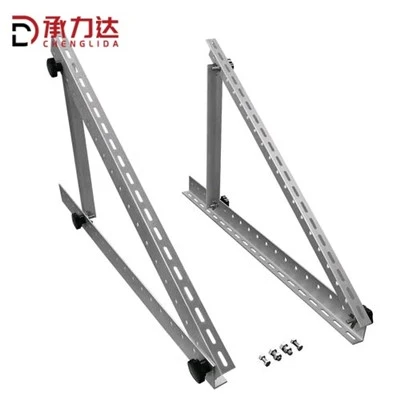
So, to wrap this up: PV guide rail bending usually isn’t a mystery. It’s almost always one of a few things: too much load, cheap materials, bad installation, corrosion, or ignoring thermal movement. The good news is, most of these are avoidable. If you’re in the market for new rails, or you’re dealing with bent ones and need to sort it out, hit us up to chat. We can help you figure out the right rail for your setup, answer any questions, and make sure you don’t have to deal with this hassle down the line. Don’t let bent rails mess up your solar investment—reach out, and let’s get it fixed right.
PV Guide Rail References
- International Energy Agency (IEA) Solar Photovoltaic Technology Collaboration Programme. (2022). Structural Design Guidelines for PV Mounting Systems.
- Aluminum Association. (2021). 6063-T5 Aluminum Alloy Properties for Solar Applications.
- North American Board of Certified Energy Practitioners (NABCEP). (2023). PV Installation Best Practices for Mounting Rails.
- Solar Energy Industries Association (SEIA). (2022). Load Calculation Standards for Outdoor PV Systems.
Wuxi Chenglida Machinery Co., Ltd.
We are one of the most professional pv guide rail manufacturers and suppliers in China, also support customized service. Please feel free to buy durable pv guide rail made in China here from our factory. Quality products and reasonable price are available.
Address: No.4 Ruifeng Road, Huishan District, Wuxi City
E-mail: postmaster@wxcldjx.com
WebSite: https://www.wuxi-chenglida.com/
