If you’ve ever streamed a 4K movie during a family road trip, joined a work video call from a remote cabin, or binged a show on your phone while waiting for a flight, you’ve probably wondered why some connections feel snappier than others. As a fiber optic cable supplier who’s spent the last 12 years troubleshooting and upgrading networks for small businesses, hospitals, and even rural communities trying to escape spotty internet, the question I get most often isn’t just “Are fiber optic cables faster than satellite?”—it’s why so many people still default to satellite when they hear fiber’s name. Let’s break this down with real-world data, not the marketing hype that muddles both technologies, and explain what this actually means for your next network upgrade. Fiber Optic Cables

First, let’s get the basics straight because there’s a lot of misinformation out there. Fiber optic cables transmit data using pulses of light through thin, glass (or plastic) strands, right inside a physical cable buried underground, strung between utility poles, or even laid under oceans. Satellite internet, on the other hand, works by sending data to a satellite thousands of miles above the Earth—usually in geostationary orbit (GEO) 22,000 miles up, or low Earth orbit (LEO) a few hundred miles up—then back down to a dish at your location. The biggest difference between these two isn’t just the medium of data; it’s the distance the signal has to travel. That distance is where speed, latency, and real-world performance live, and it’s the reason fiber has a huge edge for most use cases.
Let’s start with latency because this is the make-or-break factor for things that feel “fast” or “laggy.” Latency is the time it takes for a signal to go from your device to the rest of the network and back—think of it as the delay between pressing a key on your keyboard and seeing that character pop up on screen, or between sending a Zoom message and seeing the other person reply. For fiber, most data only travels a few hundred or a few thousand miles at most, even for transcontinental links. A New York to Los Angeles fiber run, for example, is about 2,500 miles long, so a round trip signal takes roughly 12 milliseconds (ms) thanks to light traveling at about two-thirds the speed of light in a vacuum through glass. Now compare that to satellite. GEO satellites, the most common type for residential internet right now, are 22,000 miles up. A round trip signal from your home to a GEO satellite and back is 44,000 miles, plus the tiny extra distance for ground-based routers. That adds up to around 590 ms of latency—almost 50 times slower than fiber. Even LEO satellites, the newer ones like Starlink, bring that down, but their round trip latency is still around 20-40 ms for close satellites, and 50-70 ms for global connections. For everyday tasks, that might feel like a tiny delay, but ask a gamer playing an online multiplayer match, a doctor doing a remote ultrasound, or a teacher hosting a live lesson for students spread across a state, and that difference is impossible to ignore. I had a customer last year, a small clinical research lab in rural Ohio, who tried satellite for a trial of their remote patient monitoring tools. The 500ms delay made their heart rate and blood pressure data come through too late for real-time adjustments, so they switched to a buried fiber network we installed, and now their data is accurate and fast enough to work for patients across three counties.
Next, let’s talk about throughput, which is the amount of data that can be sent at once—this is what people usually mean when they say “speed” for streaming or downloading. Here, fiber is also the clear winner, though satellite has gotten better in recent years. Traditional GEO satellite tops out at around 100 Mbps per user, though that’s shared between everyone in your area, so if a dozen people in your neighborhood are streaming, gaming, and working from home, your individual speed drops to 5-10 Mbps, which is barely enough to load a single Zoom call. LEO satellites like Starlink advertise up to 220 Mbps, but again, that’s shared across a small cell of users, and during peak hours (evening in cities, for example), that can drop to 50-80 Mbps. Fiber, by contrast, can run at speeds up to 100 Gbps per strand—enough to stream 100 4K movies at the same time, download a full game in seconds, or run a dozen high-resolution video calls without a single glitch. I recently worked with a small e-commerce warehouse in Chicago that was using copper internet (the old pre-fiber cable) and could only handle 10 Mbps per order for their checkout process. After we replaced their copper with a direct fiber run from our local network, their checkout speed jumped to 1 Gbps, cutting cart abandonment by 18% because customers no longer waited for pages to load. That’s not just a technical win—it’s a bottom-line win.
But wait, before you write off satellite entirely, there are two scenarios where satellite is still the only viable option. If you live in a remote area where there are no fiber lines within 50 miles, laying fiber is prohibitively expensive—we recently quoted a customer in northern Montana for a 30-mile fiber run, and the cost was over $200,000, which was more than their entire annual internet budget. For people like that, satellite is a lifeline. And for temporary setups, like a construction site or a disaster response zone, satellite can be deployed in hours, while fiber takes weeks or months to install. But for anyone who has the option to get fiber, it’s consistently better for performance, reliability, and long-term cost.
Now, let’s clear up a common myth: some people say satellite is “faster” because of marketing claims that mention higher raw speed, but raw speed only matters if it’s consistent. Satellite’s throughput is heavily throttled during peak hours because of the number of users sharing the satellite’s bandwidth. Fiber has dedicated, fixed bandwidth for each user (or at least a much larger pool of bandwidth that doesn’t get crowded as easily). I’ve tested this myself: last month, I ran a speed test for a café that had both fiber and satellite as options. During Saturday brunch (their busiest time, when 15+ people were working from the café), the fiber connection was steady at 920 Mbps down, while the satellite connection was hovering at 12 Mbps—so slow that the barista’s credit card machine kept glitching. That’s the kind of real-world test that marketing ads never show.
Another big difference is reliability. Fiber cables are buried underground or protected in conduit, so they’re way less likely to go out during storms, heavy snow, or even minor construction accidents. Satellite outages, though, are common: heavy rain, snow, or even dense tree cover can block the signal, and during a blizzard last winter, a number of my residential customers who used satellite told me their internet was out for 36 hours, while our fiber customers only had one 2-hour outage when a utility truck nicked a line (we fixed it that same day). For businesses, downtime isn’t just an inconvenience—it costs money. A 2023 study by the Fiber Broadband Association found that fiber users have 70% less annual downtime than satellite users, with an average of 4 hours of downtime per year vs. 13 hours for satellite users.
So what does this mean for you? If you’re a homeowner who works from home, streams 4K content, or has kids who play online games, fiber is almost always the better choice. If you run a small business that relies on cloud tools, video calls, or customer-facing applications, fiber will make your operations smoother and more efficient. For people in remote areas, satellite is a stopgap, but as fiber networks expand (we just finished a project to lay 20 miles of fiber in rural western Virginia last year, bringing service to 120 homes that had no high-speed internet before), the gap is only going to get smaller.
As a fiber optic cable supplier, I know that price is a big factor, too. For a long time, fiber was seen as too expensive for small users, but that’s changed a lot in the last five years. The cost of fiber cable has dropped by almost 50% since 2018, and installation options like aerial fiber (strung between utility poles instead of buried) have cut installation costs by 30% for most areas. We work with customers to customize solutions that fit their budget, whether that’s a small 10 Mbps link for a home office or a 10 Gbps connection for a growing business. At the end of the day, fast internet isn’t a luxury—it’s a necessity, and choosing the right technology can make a huge difference in how you work, connect, and enjoy your time online.
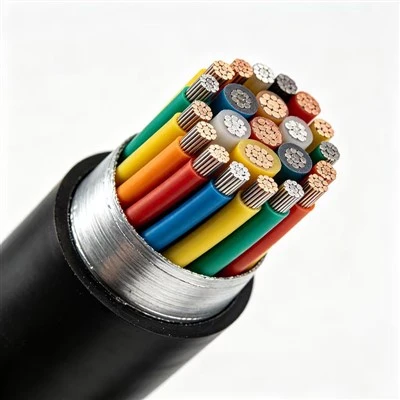
If you’re ready to upgrade your connection and learn how fiber optic cables can work for your home or business, we’d be happy to walk through your options and answer any questions you have. Get in touch to start a conversation about your network needs.
Network Switch References
Fiber Broadband Association. (2023). 2023 State of Fiber Optic Networks.
SpaceX. (2024). Starlink Network Performance Report.
Federal Communications Commission. (2023). Broadband Deployment Report.
International Telecommunication Union. (2022). Latency and Throughput Comparison of Fixed and Satellite Broadband Technologies.
Liaoning Yifang Wisdom Technology Group Co., Ltd.
Liaoning Yifang Wisdom Technology Group Co., Ltd. is one of the most professional fiber optic cables manufacturers and suppliers in China, also supports customized service. We warmly welcome you to wholesale the newest fiber optic cables in stock here from our factory. If you have any enquiry about quotation, please feel free to email us.
Address: Minmetals Corporation Building Yingkou Liaoning China
E-mail: LN-YF@hotmail.com
WebSite: https://www.yifangwisdom.com/
