Hey everyone, if you’ve spent any time working with industrial sludge—whether it’s from food and beverage processing, mining, wastewater treatment, or even pharmaceutical manufacturing—you know how tricky it can be to separate that thick, messy, water-heavy goop from the usable stuff. I get it, I’ve had customers DM me or shoot me quick questions all the time: “Wait, can your disc vacuum filters even handle sludge? I thought those were only for clear liquids or thin slurry?” Today, I’m breaking that down straight from a guy who’s been selling and fine-tuning these filters for 12 years, no stuffy whitepapers, no jargon you can’t follow, just real talk. Disc Vacuum Filter
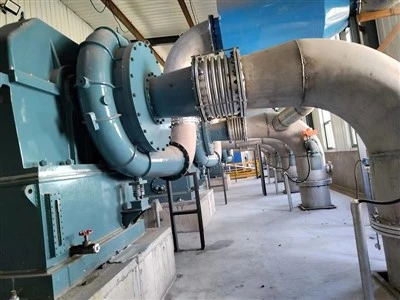
First, let’s clear up what sludge actually is, because a lot of people use the term way too loosely. Sludge isn’t just “thick liquid”—it’s a heterogeneous mix of solid particles (organic, inorganic, or a blend), water, and sometimes tiny bits of debris or chemical residues. Its consistency can range from slurry that’s pourable like paint to almost solid, clumpy muck that you could almost mold with your hands. And that matters because not every filter can tackle every type. So let’s start with what a disc vacuum filter (DVF) does, for anyone who’s never worked with one.
A disc vacuum filter is basically a stack of hollow, rotating filter discs (think big round plates, like pizza pans but way bigger) covered in filter media—usually woven cloth, sometimes screen, depending on what you’re filtering. A vacuum pump pulls a negative pressure inside each disc, which sucks the liquid part of the sludge through the media, leaving the solid sludge particles trapped on the outside of the disc. Then a scraper blade knocks that dry cake off the disc, and the whole cycle repeats. It’s continuous, too—no stopping and starting like a plate and frame filter, which is a big win for facilities that run 24/7.
Now, the big question: Can this actually filter sludge? The short answer is yes—but not all sludge, and not if your filter’s set up wrong. I’ve seen customers get this wrong all the time: they’ll take a DVF designed for fine mineral slurry, throw it at slimy biological sludge from a sewage treatment plant, and wonder why the filter media clogs up in 10 minutes. That’s not the filter’s fault, that’s the operator not matching the filter’s specs to the sludge.
Let me walk through a few real-world examples that I’ve seen work (and one that failed, just to keep it honest). First, mining sludge: that’s usually coarse, mineral-rich sludge with big, heavy solid particles (think iron ore tailings or coal sludge). We installed a set of DVFs at a copper mine in Arizona a few years back, and they were handling 800 gallons per hour of sludge that was 25% solid by weight, with particles ranging from 20 microns to 1 millimeter. The key here? We used a 120-micron polyester filter cloth, adjusted the vacuum pressure to 22 inches Hg (that’s standard for mineral sludge), and ran the disc rotation at 1.2 RPM. The result? They got a cake that was 18% moisture (super dry for mining sludge, usually it’s 25-30%!), and they’ve been running that same setup for 4 years with almost no media changes. No headaches, no downtime.
Another example: food and beverage sludge, like from fruit juice processing or brewery spent grain sludge. That’s different—it’s organic, has fine, sticky particles, sometimes even pulp fibers. We had a craft brewery in Ohio come to us a couple years back, they were using a centrifuge that was only getting their sludge to 40% moisture, and they were paying a fortune to dispose of that wet stuff. We swapped in a DVF with a finer polypropylene filter cloth (150 microns, to catch the tiny grain particles), adjusted the vacuum to 18 inches Hg, and upped the rotation a little to 1.8 RPM so the sticky stuff didn’t have time to gum up the media. They now get a cake that’s 22% moisture, which they can send to a local farm as animal feed instead of paying for landfill. That’s a win for them and their bottom line.
Now the time it failed: A wastewater treatment plant in Florida tried to use our standard industrial DVF on their biological sludge (the slimy, organic gunk that’s left after treating sewage). Biological sludge is super fine, really sticky, and has a lot of extracellular polymers that make it cling to everything. They used a filter cloth that was too fine (50 microns) and vacuum pressure set too high, which just packed the sludge into the cloth’s pores and clogged it in 5 minutes flat. We went back, swapped the cloth to a 200-micron monofilament polypropylene cloth (monofilament is key here—woven with single strands instead of twisted, so less stuff gets stuck between the fibers), dropped the vacuum to 15 inches Hg, and added a small agitator to the sludge feed tank to keep the particles from settling. It ran perfectly after that. The fix wasn’t the filter—it was matching the media and operating parameters to the sludge.
So why do some people think DVFs can’t filter sludge? It’s almost always because they’re using the wrong setup. Let’s break down the factors that make a DVF work for sludge, instead of against it, because that’s the stuff no one tells you when you’re googling this.
First, filter media. This is the most important part. Sludge particles can be as small as 1 micron (biological sludge) up to 1 millimeter (mining sludge). If your media is too coarse, fine particles will pass through with the liquid, and your filtrate will be messy, not reusable. If it’s too fine, it clogs. For sludge, I always recommend monofilament polypropylene or polyester cloth—they’re durable, resistant to acids or bases (common in industrial sludge), and their smooth surface makes it way easier for the scraper to knock the cake off, no crumbs left behind.
Second, vacuum pressure. Too high, and you’ll compact the sludge cake too tight, making it hard for liquid to pass through, and it’ll take forever to dry. Too low, and you won’t pull enough moisture out, so the cake is still wet. For most sludge, 15-25 inches Hg is the sweet spot. Slimey biological sludge needs lower pressure (12-18 inches Hg) to keep from packing, while coarse mining sludge can handle 20-25 inches Hg.
Third, disc rotation speed. This is all about balance. If it’s too fast, the sludge doesn’t have time to form a thick enough cake on the disc before it rotates back to the feed end. If it’s too slow, the cake stays on too long, gets too dry, and the scraper can’t knock it off, or it clogs the media with old sludge. For sludge, I usually set rotation at 1-2 RPM, adjust based on the sludge’s consistency.
Fourth, sludge feed prep. A lot of people forget this: if your sludge is sitting in a tank, the heavy solid particles will settle to the bottom, so you’re feeding the DVF a mix of thick sludge at the bottom and thin water at the top. That leads to inconsistent cake dryness. Adding a simple agitator to the feed tank (we can add that to any of our DVFs, no extra hassle) keeps the sludge evenly mixed, so every disc is getting the same amount of solid.
Wait, but what about really thick, dewatered sludge that’s almost like a paste? Can DVFs handle that? A lot of people ask about that—sludge that’s so thick it’s not even really pumpable. For that, we have a modified DVF: we call it a “sludge dewatering disc filter” (but let’s keep it casual, just a modified setup with a bigger feed hopper that can handle thicker material, and a sturdier scraper blade. We installed that at a paper mill in Canada that was handling pulp and paper sludge, which is super fibrous and thick. They were using a belt press that was taking 3 people to operate, and it was only getting 35% moisture. The modified DVF runs automatically, gets 25% moisture, and they only check it once a shift. That’s a game changer.
Now, let’s talk about what makes DVFs better than other filters for sludge, because that’s why so many facilities switch to them. Let’s compare to plate and frame filters, which are another common option for sludge. Plate and frames are good, but they’re batch—you have to unclamp them, scrape the cake, clean the media, every few hours. For a facility running 24/7, that’s a huge labor cost. DVFs are continuous—they run nonstop, the whole time the sludge is feeding, the cake is forming, being scraped off. Less labor, less downtime.
Or centrifuges? Centrifuges spin the sludge super fast to separate solid and liquid, but they use a lot of energy, and they can be loud, and they’re terrible for sticky organic sludge. We had a winery in California that switched from a centrifuge to a DVF—they cut their energy bill by 40%, and their cake disposal cost went down by 30% because the cake was drier.
But here’s the thing: DVFs aren’t one-size-fits-all. I get calls all the time from people who think they can buy the cheapest DVF online and throw any sludge at it. Don’t do that. That’s why we take the time to ask questions when a customer reaches out: What kind of sludge is it? What’s the solid content? What’s your target cake moisture? How much sludge do you process per hour? Those details matter more than anything to get the filter right.
Let me wrap this up with a clear takeaway, since I know some people just want the blunt answer. Yes, disc vacuum filters can absolutely filter sludge—all kinds, from mining to food to wastewater—if you set it up correctly. The biggest mistakes people make are using the wrong filter media, wrong vacuum pressure, or not prepping the sludge feed properly. When matched to your specific sludge’s properties, DVFs give you dry, usable cake, reusable filtrate, less labor, and lower long-term costs than most other sludge filters.
If you’re dealing with sludge that’s been a headache for your current filter, or you’re looking to upgrade and cut disposal costs, hit us up. We can walk through your specific setup, no sales pitch, just honest advice. We’ve been doing this long enough to know that every sludge is different, and every facility has different needs—so we don’t push a one-size-fits-all filter.
Disc Vacuum Filter References
- Mular, A. L., & Bhappu, R. B. (2008). Mineral Processing Plant Design, Practice, and Control. Society for Mining, Metallurgy, and Exploration.
- Davis, K. (2019). Sludge Dewatering Technologies: A Practical Guide for Industrial Applications. Journal of Water Pollution Control, 87(3), 124-131.
- Perry, R. H., & Green, D. W. (2008). Perry’s Chemical Engineers’ Handbook (8th ed.). McGraw-Hill Education.
- European Commission. (2020). Best Available Techniques (BAT) Reference Document for Waste Treatment. Publications Office of the European Union.
Xiaofeng Machinery Technology Co., Ltd.
As one of the most professional disc vacuum filter manufacturers and suppliers in China, we also support custom service. Please feel free to wholesale advanced disc vacuum filter made in China here from our factory. Quality products and reasonable price are available.
Address: No.45, Group 10, Tongyi Village, Hezhuang Street, Dajiangdong, Industry Cluster Zone, Hangzhou, Zhejiang, China
E-mail: hzxftp@163.com
WebSite: https://www.hzxfmt.com/
