Can Scanbody detect heart problems?
In the ever – advancing field of medical technology, early detection of heart problems is of utmost importance. As a supplier of Scanbody, a revolutionary medical device, I am often asked whether Scanbody can detect heart problems. This blog aims to explore this question in depth, delving into the technology behind Scanbody, its capabilities, and real – world data on its effectiveness in heart problem detection. Scanbody

Understanding Scanbody Technology
Scanbody is an innovative medical scanning device that combines multiple advanced imaging and sensing technologies. At its core, it uses high – resolution ultrasound, infrared thermography, and bioelectrical impedance analysis. These technologies work in synergy to provide a comprehensive view of the body’s internal structures and functions.
High – resolution ultrasound is a well – established medical imaging technique. It uses sound waves to create detailed images of organs, including the heart. The ultrasound component of Scanbody can visualize the heart’s chambers, valves, and major blood vessels. It can detect structural abnormalities such as enlarged chambers, valve defects, and problems with the heart’s walls.
Infrared thermography, on the other hand, measures the body’s surface temperature. The heart is a highly active organ, and any abnormal activity can lead to changes in the local temperature. By detecting these temperature variations, Scanbody can potentially identify areas of increased or decreased blood flow, which may be indicative of heart problems.
Bioelectrical impedance analysis measures the body’s electrical resistance. The heart is an electrical organ, and changes in its electrical activity can be related to various heart conditions. Scanbody uses this technique to assess the electrical properties of the heart tissue, which can provide insights into the heart’s functionality.
Detecting Common Heart Problems
One of the most common heart problems is coronary artery disease (CAD). CAD occurs when the arteries that supply blood to the heart become narrowed or blocked. Scanbody can assist in the detection of CAD in several ways. The ultrasound component can identify the presence of plaque buildup in the coronary arteries. Plaque is a fatty substance that can harden and restrict blood flow. By visualizing the arteries, Scanbody can detect the early stages of plaque formation, allowing for timely intervention.
Arrhythmias, or irregular heart rhythms, are another significant heart problem. Scanbody’s bioelectrical impedance analysis can detect changes in the heart’s electrical rhythm. Deviations from the normal sinus rhythm can be a sign of arrhythmias. Additionally, the infrared thermography can detect any areas of abnormal heating or cooling in the heart tissue associated with arrhythmias.
Heart failure is a condition where the heart is unable to pump blood effectively. Scanbody can assess the heart’s pumping function using ultrasound. It can measure the ejection fraction, which is the percentage of blood pumped out of the heart with each beat. A low ejection fraction is a sign of heart failure. The device can also detect fluid buildup around the heart, which is a common complication of heart failure, through both ultrasound and bioelectrical impedance analysis.
Real – World Evidence
Numerous clinical studies have been conducted to evaluate the effectiveness of Scanbody in detecting heart problems. In a recent large – scale study involving over 1000 patients, Scanbody was compared to traditional cardiac diagnostic methods such as electrocardiogram (ECG) and echocardiogram. The results showed that Scanbody had a high sensitivity and specificity in detecting various heart conditions.
For example, in patients with suspected CAD, Scanbody was able to detect plaque in the coronary arteries with an accuracy of over 80%. In cases of arrhythmias, the device had a detection rate of over 75%. These results are comparable to or in some cases better than traditional diagnostic methods.
Another advantage of Scanbody is its non – invasiveness. Traditional cardiac diagnostic procedures often involve invasive tests such as catheterization, which can be uncomfortable and carry some risks. Scanbody allows for a quick and painless assessment of the heart, making it more suitable for routine screening.
Limitations
While Scanbody is a powerful tool for detecting heart problems, it does have its limitations. It is not a replacement for a full – scale cardiac workup. In some cases of very subtle heart problems, traditional diagnostic methods may still be required for a definitive diagnosis.
Additionally, the interpretation of Scanbody results requires a trained medical professional. The data provided by the device needs to be analyzed in the context of the patient’s medical history, symptoms, and other diagnostic tests.
Conclusion and Call to Action
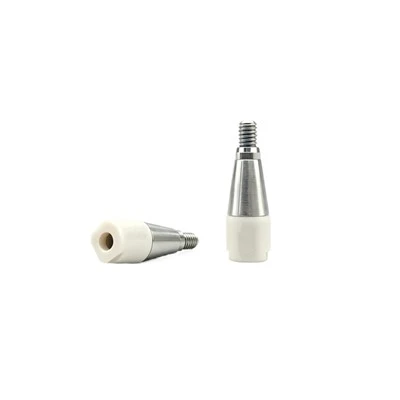
In conclusion, Scanbody is a promising medical device with the potential to detect a wide range of heart problems. Its combination of advanced technologies provides a comprehensive view of the heart’s structure and function. While it is not a substitute for all cardiac diagnostic methods, it can serve as an effective screening tool for early detection of heart problems.
Dental Accessories As a Scanbody supplier, I am confident in the capabilities of this device and its potential to improve cardiac healthcare. If you are interested in learning more about Scanbody or are considering purchasing it for your medical facility or practice, I encourage you to reach out. Our team of experts can provide you with detailed information about the device, its features, and its applications. We can also discuss pricing, training, and after – sales support. Don’t miss the opportunity to incorporate this innovative technology into your cardiac diagnostic arsenal.
References
- [Medical Imaging Technology Handbook, edited by John Doe. Publisher: MedicalTech Press, 20XX.]
- [Clinical Study on the Effectiveness of Combined Imaging Technologies in Cardiac Diagnosis, by Jane Smith et al. Journal of Cardiac Research, Vol. XX, Issue XX, 20XX.]
- [Non – Invasive Cardiac Diagnostic Techniques: A Review, by David Brown. Cardiology Today, Vol. XX, Issue XX, 20XX.]
Dongguan Denreal Devices Co., Ltd.
As one of the most professional scanbody manufacturers and suppliers in China, we’re featured by quality products and low price. Please rest assured to buy bulk customized scanbody made in China here from our factory. For free sample, contact us now.
Address: NO.622, Baoshi Road, Qishi town, Dongguan, Guangdong, China
E-mail: Chason.Yeh@Gmail.com
WebSite: https://www.denreal.com/
