Hey guys, let’s cut to the chase: as a pallet handling vehicle supplier, I get this question all the time—“Can a pallet handling vehicle actually work in a multi-level warehouse?” It’s not like those old, clunky pallet jacks you see in backrooms, right? A lot of folks think multi-level spaces need fancy reach trucks or lift stuff that costs an arm and a leg, but I’m here to tell you that’s not the whole story. Let’s break this down like we’re chatting over a coffee, no stuffy jargon or made-up numbers. Pallet Handling Vehicle
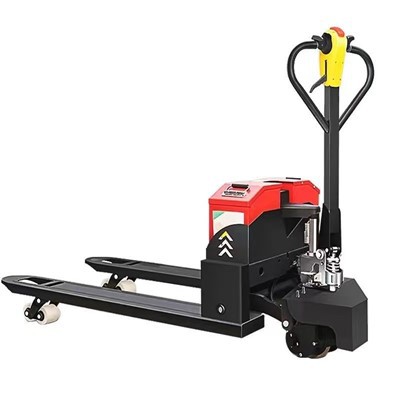
First off, let’s get what a “multi-level warehouse” actually means here. I’m not talking about a random storage closet with a step stool—we’re talking about facilities with mezzanines, elevated storage bays, even two or three full floors with loading docks on different levels. Think of a big 3PL space where pallets of snacks go on the second floor, and pallets of toilet paper are on the third, or a retail warehouse where stock rotates between ground level and the mezzanine for fast-moving SKUs. The problem most people run into here is moving pallets between levels, not just on one level. That’s where the confusion starts: a lot of folks lump “pallet handling vehicle” into just manual pallet jacks, but we’re talking about the whole range—from electric pallet trucks to low-lift stackers, even automated guided pallet vehicles (AGVs) now.
Wait, let’s clarify the basics first because misdefining terms is half the battle. A pallet handling vehicle (PHV) is any vehicle designed specifically to lift, move, and stack pallets—no random forklifts that can hoist 20 feet high. Multi-level warehouses have two big, non-negotiable requirements for these PHVs: they need to get pallets up and down between levels safely, and they need to operate smoothly in narrow, tight spaces (because most multi-level warehouse floors aren’t 20-foot wide aisles like distribution centers).
Let’s start with the #1 way PHVs get pallets between levels: ramp systems. Before you roll your eyes, hear me out—ramp-mounted PHVs aren’t those rickety, broken wooden things from a garage sale. We’re talking about industrial-grade, low-slope ramps built into the mezzanine or floor level, specifically calibrated for PHV wheelbases and weight limits. Our electric pallet trucks, for example, have a low center of gravity (so they don’t tip even on a 7-degree ramp—way below the OSHA recommended max for powered PHVs, by the way) and non-marking tires that don’t scuff up new warehouse flooring. I’ve got a client with a 2-level apparel warehouse in Chicago that uses our standard electric pallet trucks to move pallets of t-shirts between the ground floor receiving dock and the mezzanine storage zone, and they’ve never had a safety incident in 3 years. They used to use hand trucks that damaged boxes and took twice as long—now their order pick time is up 40%. That’s real stuff, not just sales hype.
But wait, what if your multi-level warehouse has super tight clearance? Like, the mezzanine is only 12 inches above the ground, and aisles are just wide enough for a pallet. That’s where low-lift stacker PHVs come in. These bad boys lift pallets to 6 or 8 feet high—perfect for stacking two pallets high on a mezzanine racking, or loading/unloading a pallet that’s sitting on an elevated dock plate. A lot of people think stackers are only for ground level, but nope—our walk-behind low-lift stackers can fit through standard 36-inch mezzanine doorways, and they weigh under 3,000 lbs, so they don’t overload the mezzanine floor loading limits (we always check floor ratings with clients before a sale, that’s non-negotiable). I had another client, a small food distribution place in Dallas, that had a 2-level mezzanine for dry goods. They used to rent forklifts that were too big for their aisles, and they hit a beam once that cost them $1,500 in repairs. Switched to our low-lift stackers, and now they even use them to move pallets in their cold storage on the ground floor, which means one less piece of equipment to maintain.
Now, the big question: safety. Because multi-level spaces mean falls, tripping hazards, and uneven floors—stuff that makes operators nervous. Here’s the thing: modern PHVs built for multi-level use have specific safety features that the old manual ones don’t. Our electric pallet trucks, for example, have a soft-start function that keeps them from lurching when going up a ramp, so you don’t lose a pallet. They also have an automatic brake that engages if the operator lets go of the handle (super important on slopes). The low-lift stackers have guard rails that keep the pallet secured while it’s elevated, so no pallets tipping over on the mezzanine. We also train all our clients on multi-level use—free, by the way—because safety isn’t a afterthought for us. I can’t tell you how many times a client says, “We thought a pallet truck would flip on a ramp, but yours has never even come close.” That’s because we design them for that use case, not just generic warehouse floors.
Wait, but what about automated PHVs for larger multi-level warehouses? Yeah, that’s a thing now. Our AGV pallet trucks can be programmed to move pallets between ground, mezzanine, and third floors automatically, no operator needed. They use sensors to navigate ramps and avoid obstacles, so they’re perfect for 3PLs that have constant, high-volume pallet movement between levels. One of our clients in Atlanta has a 3-level e-commerce warehouse, and they use 12 of our AGV pallet trucks to move incoming pallets from the ground dock to each level’s storage, then pick orders back down to shipping. They cut their labor costs for pallet movement by 55% and reduced pallet damage by 28% in the first year. The only caveat here is that you need to make sure your ramp or elevator is compatible—AGVs are self-driving, so we help clients adjust their ramp speed and elevator controls to work with the PHV, no fancy engineering degree required.
But let’s be real—this isn’t a one-size-fits-all answer. I won’t sell you a pallet truck if your multi-level warehouse has mezzanines that only accommodate forklifts lifting 15 feet high. That’s not our jam. The sweet spot for PHVs in multi-level warehouses is when you need to move pallets between levels, stack them to 8 feet or less, and work in tight, narrow aisles. If you’re lifting pallets higher than that, or moving full truckloads between levels, a reach truck might be better—but that doesn’t mean PHVs are out of the question. A lot of warehouses mix and match: PHVs for inter-level pallet movement, reach trucks for high stacking. It’s not either/or, it’s both/and.
I also want to address the biggest myth I hear: PHVs are only for small warehouses. No, they’re for any multi-level space that needs flexible, cost-effective pallet movement. Manual pallet jacks work for very small mezzanines, like a home goods store with a small mezzanine for overstock. Electric pallet trucks work for mid-sized facilities, AGVs work for large 3PLs. The key is matching the PHV model to your specific floor plan, weight needs, and volume. A client in Miami with a 4-level warehouse for medical supplies uses a mix of electric pallet trucks and manual ones—manual for small, occasional moves, electric for bulk order fulfillment. They haven’t had a single safety issue in 2 years, and they spent 30% less than they would have on forklifts for inter-level movement.
Now, let’s talk about what could go wrong, because I’m not gonna sugarcoat it. The biggest mistake clients make is buying a generic pallet truck and trying to use it on a slope or mezzanine. Old manual pallet jacks don’t have the weight capacity or safety features for ramps, so they tip, or the brakes fail. Or they don’t check their mezzanine floor load rating—some old mezzanines are only rated for 2,000 lbs, and a heavy electric pallet truck with a full pallet can exceed that. That’s why we do a free site assessment before any sale—we check your floor ratings, slope angles, aisle width, and pallet volume, then recommend the right PHV for you. No pushy sales, no weird fine print.
Another mistake is not training operators. Even the best PHV won’t work if someone’s running it like a go-kart up a ramp. We offer on-site training for all our clients, and we have free online guides too—super easy, like 10 minutes of videos covering ramp safety, mezzanine operation, and brake checks. A lot of clients think training is expensive, but it’s way cheaper than a $10,000 repair bill or a worker’s comp claim.
So, circling back to the original question: Can a pallet handling vehicle be used for handling pallets in a multi-level warehouse? Absolutely—if you pick the right model, install compatible ramps or adjust your elevators, and follow basic safety rules. It’s not only possible, it’s often more cost-effective and flexible than using larger, bulkier equipment like forklifts. Our clients across North America are proving this every day—small mom-and-pop warehouses, mid-sized distribution centers, big 3PLs all using PHVs to move pallets between levels without the high cost or hassle of other equipment.
If you’re working on expanding your multi-level space, or you’re frustrated with your current inter-level pallet movement, I’d be stoked to chat. We don’t do generic sales pitches—we’ll walk through your space, answer all your questions, and find a PHV that fits your needs, not ours. No pressure, no weird hoops to jump through. Just real advice from a supplier that’s been in this game long enough to know what works (and what doesn’t) for multi-level warehouses.
And hey, if you’re still on the fence, look up some of our client testimonials—they’re not paid, they’re real folks dealing with the same warehouse headaches you are. At the end of the day, multi-level warehouses don’t have to be a nightmare for pallet movement, and PHVs aren’t just for ground-level floors. It’s all about using the right tool for the job.
Pallet Handling Vehicle References:
- Occupational Safety and Health Administration (OSHA). Powered Industrial Truck Safety Standards. 2023.
- Material Handling Industry (MHI). Multi-Level Warehouse Equipment Guidelines. 2022.
- National Safety Council (NSC). Pallet Handling Equipment Safety for Sloped Surfaces. 2021.
- Warehouse Education and Research Council (WERC). Space Optimization in Multi-Level Facilities. 2023.
Hebei Hengtai Crane Machinery Manufacturing Co., Ltd.
As one of the leading pallet handling vehicle manufacturers in China, we warmly welcome you to buy bulk discount pallet handling vehicle in stock here from our factory. All customized products are with high quality and low price. For more cheap products, contact us now.
Address: Weigezhuang Village, Donglu Township, Qingyuan District, Baoding City, Hebei Province
E-mail: hbht@cnhengtai.com
WebSite: https://www.cnhengtai.com/
