If you’ve ever visited a mining operation, a bulk material handling facility, or a heavy manufacturing plant, chances are you’ve seen conveyor belts moving tons of material horizontally—from stockpiles to processing plants, from loading docks to railcars. But what about vertical conveying? When you need to move bulk materials straight up, whether it’s coal, ore, grain, or industrial minerals, the solution gets a lot trickier. As an aramid conveyor belt supplier, I get this question all the time: Can aramid conveyor belts actually work for vertical conveying? The short answer is yes—but there’s a lot more to it than a simple “yes” or “no” when it comes to how these high-performance belts perform, what challenges they solve, and why they’re becoming a go-to choice for vertical conveying applications that old-fashioned conveyor belts can’t handle. Aramid Conveyor Belt
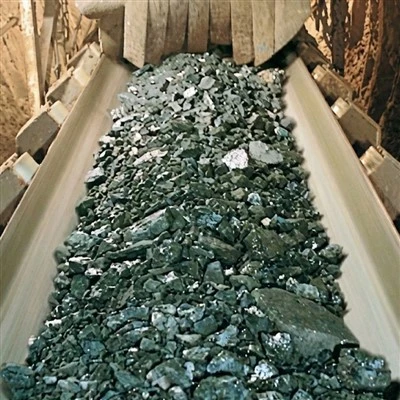
Let’s start with a quick refresher on what makes aramid conveyor belts different. Aramid is a synthetic fiber most famous for its use in bulletproof vests, but in conveyor belt form, it delivers properties that are perfect for heavy-duty, high-stress applications: exceptional tensile strength (stronger than steel pound for pound), excellent resistance to abrasion and impact, low stretch, and durability under extreme temperatures and harsh environmental conditions. Traditional conveyor belts, which rely on steel cords or polyester fabric for tensile strength, have real limitations when you need to move materials vertically. For vertical conveying, the belt has to support not just its own weight, but the weight of the material it’s carrying over the entire length of the lift. That creates a lot of tension along the belt, and stretch is the enemy here. If a belt stretches too much as it moves up a vertical rise, it can slip on the drive pulley, lose alignment, or even tear under the load. Polyester and steel cord belts often struggle with this—polyester stretches more than aramid, requiring frequent retensioning, while steel cord belts are heavy, prone to corrosion, and can be stiff, making them hard to handle during installation and maintenance.
So why aramid for vertical conveying specifically? Let’s break down the key advantages that make it a fit. First, tensile strength. Vertical conveyor belts need to handle high load tensions, and aramid’s tensile strength is unmatched for its weight. For example, a 1-inch thick aramid conveyor belt can have a tensile strength of over 1,000 kN/m, which means it can support thousands of pounds of material without stretching. That’s critical for vertical lifts—even a 100-meter vertical lift of heavy ore can add up to a lot of tension along the belt, and aramid doesn’t give in to that tension the way other materials do. The low stretch factor is another big one. When a belt stretches, the distance between the drive pulley and the tail pulley changes, leading to misalignment, spillage, and increased wear on the belt’s edges. Aramid’s stretch under load is less than 2% at peak working tension, compared to up to 5% for polyester belts and even more for older fabric belts. That consistent length means the belt stays aligned, runs smoothly, and requires less maintenance to adjust tension over time.
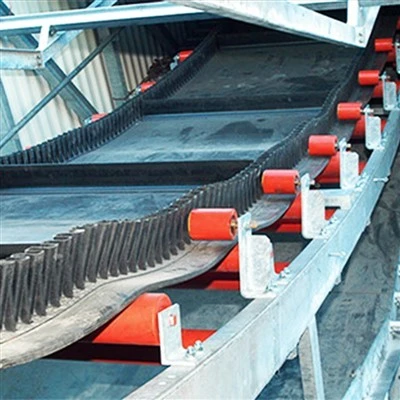
But vertical conveying isn’t just about strength—there’s also the issue of what kind of vertical conveyor system you’re using. There are two main types of vertical conveying systems: cleated belt conveyors (also called inclined conveyors with high cleats that can move material up steep or near-vertical angles) and bucket elevators. For cleated belt vertical conveyors, aramid belts work really well, especially for steep angles (30 to 90 degrees) where the load can’t roll back down the belt. The cleats themselves are usually bolted or vulcanized to the belt, and aramid’s high strength means it can handle the force of the material pressing against the cleats without tearing. For bucket elevators, which use buckets attached to a belt or chain to lift material vertically, aramid belts are a game-changer for medium to high-capacity applications. Bucket elevators need to withstand the impact of material being loaded into the buckets, the tension of the belt carrying the buckets up, and the wear as buckets discharge material at the top. Aramid’s abrasion resistance and impact strength mean it lasts longer than belts made with other materials, reducing downtime for belt replacements.
Of course, it’s not all smooth sailing—there are challenges to using aramid conveyor belts for vertical conveying, and it’s important to be real about them. One common concern is cost. Aramid fiber is more expensive than steel or polyester, so upfront costs for the belt are higher. But here’s the thing: when you factor in the total cost of ownership, aramid belts often save money in the long run. Because they have lower stretch, they require less retensioning and fewer adjustments, which means less maintenance labor and less downtime. Their high durability means they last 2 to 3 times longer than steel cord or polyester belts in many vertical applications, so you’re not replacing them as often. For operations that run 24/7, even a few hours of downtime for belt replacement can cost tens of thousands of dollars in lost production, so the upfront premium pays for itself quickly. Another challenge is handling the belt during installation. Aramid belts are strong, but they’re lighter than steel cord belts of the same tensile strength, which might sound like a benefit, but it means they can be more prone to kinking if not handled carefully during installation. That’s why proper installation protocols are key—we work closely with our customers to provide training and guidelines on how to handle, cut, and splice aramid conveyor belts for vertical applications to avoid kinks or damage.
Another point to consider is material compatibility. Aramid is resistant to many chemicals, oils, and acids, but not all. For example, strong alkaline solutions can degrade aramid over time, so it’s important to match the belt’s cover material to the materials being conveyed. Most aramid conveyor belts for vertical applications use covers made of rubber (either natural or synthetic) that are resistant to abrasion and chemical exposure. For operations moving acidic materials, we can also provide custom covers like nitrile or chlorosulfonated polyethylene (CSM) that work with aramid to resist corrosion. That customization is a big part of what we do as a supplier—we don’t just sell a one-size-fits-all belt; we work with customers to design a belt that fits their specific vertical conveying needs, whether that’s for grain, coal, metal ore, or construction materials.
Let’s talk about a real-world example to put this into perspective. A few years back, a customer in the copper mining industry was struggling with their vertical bucket elevator. They were using a steel cord belt that was constantly stretching, requiring them to retension it every 2 weeks, and it was tearing regularly at the bucket attachment points, leading to 3 to 4 days of downtime every month. They switched to an aramid conveyor belt from our line, and the results were dramatic. The retensioning interval extended to every 6 months, and the belt hasn’t torn in over 3 years of operation. Their downtime for bucket elevator maintenance dropped by 90%, and they saved over $150,000 in lost production and maintenance costs in the first year alone. That’s the kind of return on investment that makes aramid a no-brainer for many vertical conveying applications.
Another common use case for aramid vertical conveyor belts is in grain handling. Grain elevators need to move large volumes of grain vertically, and they deal with a lot of dust, impact, and occasional moisture. Aramid belts are resistant to the abrasion of grain kernels, and their low stretch means that the buckets stay evenly spaced, preventing spillage. We also have customers in the port industry, moving bulk cargo like soybeans and iron ore, where vertical conveyors are used to load and unload ships. The high tensile strength of aramid belts allows them to handle the heavy loads of bulk cargo, and their durability stands up to the rough conditions of port operations where dust, humidity, and constant use are the norm.
So what does the future look like for aramid in vertical conveying? As bulk handling operations push for higher capacities, longer vertical lifts, and lower downtime, aramid conveyor belts are only going to become more popular. New formulations of aramid fiber are being developed that are even more resistant to heat and chemicals, opening up opportunities in applications that were previously off-limits. For example, some of our customers are using aramid belts in foundries where they move hot metal scrap vertically, a use case that was difficult with traditional belts due to high temperatures. We’ve also developed heat-resistant cover materials that work with aramid to withstand temperatures up to 120°C, making it possible to move hot bulk materials like clinker or sinter.
If you’re considering whether aramid conveyor belts are right for your vertical conveying application, there are a few key factors to keep in mind. First, calculate the total cost of ownership, not just the upfront belt cost. As I mentioned earlier, aramid’s longer lifespan and lower maintenance often make it more cost-effective than cheaper belts in the long run. Second, work with a supplier who understands both aramid technology and vertical conveying systems. Not all conveyor belt suppliers can design a custom aramid belt that’s optimized for vertical use—you need someone who knows about tension requirements, cleat compatibility, and installation best practices. Third, test a sample if possible. Many of our customers start with a smaller vertical application to test the belt, then expand to larger systems once they see the results.
At the end of the day, the answer to “Can aramid conveyor belts be used for vertical conveying?” is a resounding yes—when they’re the right fit for your application, and when you work with a supplier who knows how to design, install, and maintain them. They solve many of the problems that traditional belts face in vertical systems: stretch, tears, frequent maintenance, and downtime. For operations looking to boost efficiency, reduce costs, and improve reliability in their vertical material handling, aramid conveyor belts are a proven, high-performance solution.
Sidewall Conveyor Belt If you’re interested in learning more about how aramid conveyor belts can work for your vertical conveying needs, or if you’d like to discuss a custom solution for your operation, reach out to us to connect with our team of experts. We can help you assess your current system, explain the benefits of aramid, and provide a quote tailored to your specific requirements. Whether you’re dealing with a small grain elevator or a large mining operation, we have the experience and products to help your vertical conveying run smoothly and efficiently.
References
- Society for Mining, Metallurgy & Exploration (SME). (2021). Bulk Material Handling Handbook, 5th Edition. SME.
- Conveyor Equipment Manufacturers Association (CEMA). (2022). Belt Conveyors for Bulk Materials, 7th Edition. CEMA.
- Aramid Fiber Manufacturers Association (AFMA). (2020). Aramid Conveyor Belts: Performance and Applications. AFMA Technical Report.
- International Journal of Bulk Solids Handling. (2019). “Tensile Performance of High-Strength Conveyor Belts for Vertical Lifts.” Vol. 39, No. 2, pp. 45-52.
- National Association of Conveyor Belt Manufacturers (NACM). (2021). Best Practices for Vertical Conveyor Installation and Maintenance. NACM.
Alumina Technology (Qingdao) New Materials Co., Ltd.
As one of the most professional aramid conveyor belt manufacturers and suppliers in China, we also support customized service. With abundant experience, we warmly welcome you to buy aramid conveyor belt for sale here and get quotation from our factory. For price consultation, contact us.
Address: No.448, Jiangshan South Road, Huangdao District, Qingdao City, Shandong Province
E-mail: Gloria.zhang@contitech.cn
WebSite: https://www.altechconveyorbelt.com/
