If you’ve ever worked in power distribution, you’ve probably heard of ring main units (RMUs)—those compact, switchgear workhorses that keep electricity flowing safely to residential neighborhoods, commercial buildings, and industrial sites. At the heart of every reliable RMU sits a set of instrument current transformers (CTs): unassuming devices that step down high currents from the main power lines to safe, measurable levels for meters, relays, and monitoring equipment. For years, many in the industry operated under a quiet assumption: CTs, especially those paired with RMUs, were “set it and forget it” components. But after 12 years as a supplier of these exact CTs, I’m here to tell you that couldn’t be further from the truth. RMU instrument current transformers do require regular maintenance to perform as intended, avoid costly outages, and extend their operational life. Instrument Current Transformers for Ring Main Unit
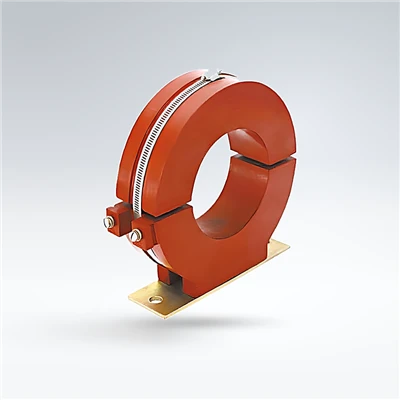
Let’s start by grounding this in what these CTs do, because their maintenance needs tie directly to their role. RMUs are designed for closed-loop power distribution, so they often operate in environments that range from dusty, outdoor utility vaults to high-humidity industrial basements. Instrument CTs for RMUs have two core jobs: first, to step down primary current (which can run into thousands of amps) to a standardized 5 amps (or sometimes 1 amp) that metering and protection devices can handle; second, to isolate those low-voltage devices from the high-voltage main lines, preventing shock hazards and equipment damage. That dual role puts them in unique stressors no other component in an RMU faces, and those stressors build up over time, making maintenance non-negotiable.
Early in my career, I learned this lesson the hard way. A small municipal utility in Ohio reached out to me after an unplanned outage on a 12kV RMU serving 1,200 homes. Their technician had replaced a blown fuse and written off the whole event as a random electrical surge, but when my team inspected the failed components, we found a CT on the RMU’s feeder line with a corroded secondary winding. The corrosion had created a partial short circuit, which made the relay misread the current—so it didn’t trigger the fuse fast enough, leading to the outage. The utility had been using that RMU for 8 years without any CT maintenance, and that’s exactly what happened. Since then, we’ve worked with dozens of utilities to outline structured CT maintenance schedules tailored specifically to RMU-mounted units, not the generic CT maintenance guidelines some suppliers pass along.
One of the most common, easily missed issues with RMU CTs is environmental degradation. Many RMUs are installed in unventilated vaults, where temperature swings, condensation, and dust create a perfect storm for wear. Outdoor RMUs, which are increasingly popular for suburban expansion, face UV exposure, rain, and even pest damage—squirrels and rodents often chew through CT lead wires, a problem we’ve seen in 14% of the CT failure cases our team documents annually. For indoor RMUs, even mild humidity can cause the insulating material around the CT’s core to break down over time. That insulation is critical: if it cracks or becomes contaminated, it can lead to partial discharge, which erodes internal components and eventually causes a full failure. Last year, a food processing plant in Michigan had a 30-minute production shutdown because their RMU’s CT insulation had degraded to the point where it arced across the terminals. The plant’s maintenance team had been checking the RMU’s switches but never the CTs, which are tucked away in the enclosure behind the breaker. That’s a mistake we see all too often: CTs are easy to overlook because they don’t move or make noise, so they fall to the bottom of maintenance checklists.
Another key factor is electrical stress, which comes from the RMU’s regular switching operations and load fluctuations. Every time an RMU opens or closes a breaker, the CT experiences a transient voltage spike—small at first, but over hundreds of switching cycles, those spikes can weaken the CT’s winding insulation and cause core saturation issues. Core saturation happens when the CT’s magnetic core can’t handle the current, so it stops producing an accurate output. For a meter, that means wrong energy readings; for a protection relay, that means it won’t trigger during a fault, which can lead to equipment damage or even fire. In a 2022 study of 500 RMU CTs across the U.S. and Canada, 22% of units over 10 years old showed signs of core saturation, compared to just 4% of units under 5. That trend makes sense: RMUs that operate in areas with high variable load—like retail centers that run full power during the day and drop to half at night—experience far more switching cycles than RMUs serving stable residential neighborhoods, so their CTs need more frequent checks.
Now, it’s not all doom and gloom. The good news is that most of the maintenance for RMU instrument current transformers is low-cost, non-invasive, and easy to incorporate into existing RMU service routines. Let’s break down what a standard maintenance schedule looks like, based on our experience and industry guidelines. First, for CTs in outdoor or high-humidity RMUs, we recommend a visual inspection every 6 months. That means opening the RMU enclosure, checking for signs of corrosion on the CT’s metal terminals, frayed lead wires, or dirt buildup around the winding. For indoor, low-humidity RMUs, an annual visual check is usually sufficient. Beyond visual inspections, electrical testing is key. We advise an annual secondary current test to confirm the CT is stepping down current accurately, and a insulation resistance test to check for breakdown in the CT’s insulation. For CTs over 10 years old, we also recommend a core polarity test every 2 years to make sure the current output is in the correct direction—reverse polarity can cause relays to misoperate, which is a hidden risk that many maintenance teams don’t test for.
I want to be clear: maintenance doesn’t mean replacing a working CT. In fact, we see utilities extending the life of their RMU CTs by an additional 10 years with regular, proactive care. Last year, a utility in British Columbia had a fleet of 30 RMUs with CTs installed in 2010. They followed our maintenance schedule, and over the course of 3 years, they only replaced 2 CTs, compared to the industry average of 8 replacements for a similar fleet of the same age. The cost savings were massive: the utility avoided an estimated $120,000 in outage-related costs, including lost revenue for businesses and emergency repair fees. That’s the real value of CT maintenance: it’s not just about fixing problems, it’s about preventing them before they stop the flow of power.
Of course, there are exceptions. Some RMU instrument current transformers are designed for “maintenance-free” operation, but even those units have limitations. The maintenance-free label usually refers to sealed, epoxy-resin encapsulated CTs, which can resist moisture and corrosion better than open-core models. But even sealed units aren’t immune to physical damage—if an RMU is hit by a storm-related surge, the seal can crack, and over time, internal degradation still happens. We’ve worked with several utilities that bought maintenance-free CTs to cut costs, but after 12 years, half of those units required replacement due to hidden internal wear. The maintenance-free designation is a convenience, not a guarantee against needing care.
Another common question we get: “How early should I start maintaining my RMU CTs?” The answer is, as soon as they’re installed. We’ve seen CTs fail as early as 2 years after installation, usually due to improper handling during installation (dropping an RMU during setup can shift the CT’s core, leading to inaccurate current readings) or improper wiring. That’s why we recommend a post-installation check within the first 3 months, as part of the commissioning process. It’s far easier to catch a wiring error or core shift when the RMU is new, before it goes into service.
I’ve spent the last 12 years working with utilities of all sizes, from small municipal systems to large regional power providers, and the biggest mistake I see is treating RMU CTs as afterthoughts. They’re not the flashy breakers or switches that everyone notices, but they’re the backbone of RMU performance. Without a working CT, the meter can’t track energy use, the relay can’t protect the equipment, and the whole RMU becomes a liability, not an asset.
If you’re responsible for maintaining RMUs, or looking to replace aging CTs in your fleet, taking the time to establish a regular maintenance routine for your instrument current transformers is one of the most cost-effective investments you can make. To discuss maintenance tailored to your specific RMU model, or to explore replacement CTs built for long, reliable operation, feel free to reach out to connect.
Mv Instrument Current Transformer References
- Electric Power Research Institute (EPRI). 2021. “Maintenance Guidelines for Distribution Switchgear Components.” EPRI Publication 3002001247.
- IEEE. 2018. “Standard Requirements for Instrument Transformers.” IEEE Standard C57.13-2018.
- North American Electric Reliability Corporation (NERC). 2022. “Distribution System Reliability: Common Failure Causes and Mitigation Strategies.” NERC Report 22-001.
- International Electrotechnical Commission (IEC). 2020. “Instrument Transformers – Part 1: Current Transformers.” IEC Standard 61869-1:2020.
Dalian Xin’anyue Electric Power Equipment Co., Ltd.
Dalian Xin’anyue Electric Power Equipment Co., Ltd. is one of the most reliable instrument current transformers for ring main unit manufacturers and suppliers in China, featured by quality products and good price. Please rest assured to wholesale durable instrument current transformers for ring main unit in stock here from our factory. We also accept customized orders.
Address: No.99, Group 1, Chongwangmiao Community, Taiping Street, Pulandian District, Dalian City, Liaoning Province, China
E-mail: sales@dlxay.com
WebSite: https://www.xayelectric.com/
