If you’ve ever stood in a metal fabrication plant watching steel bars glide through a long, glowing furnace, or seen a forging hammer shape a piece of metal into a truck axle or a wrench, you might have wondered how that metal gets heated so evenly and efficiently without open flames or messy fuel stacks. As a supplier of metal heating furnaces, I get this question all the time from fabricators, forgers, and even engineers who are used to older, less precise heating methods. Today, I want to break down what an induction metal heating furnace is, why it’s become the go-to for so many modern operations, and how it stacks up to the old-school furnaces many of us grew up working around. Metal Heating Furnace

Let’s start with the basics: induction metal heating is a process that uses electromagnetic fields to heat conductive materials—almost always metals like steel, aluminum, copper, or brass—without direct contact between the heat source and the metal itself. Think of it like a wireless charger for your phone, but scaled up to heat 10-foot-long steel bars weighing thousands of pounds. Instead of transferring power via a coil that sits on your phone, an induction heating furnace uses a water-cooled copper coil wrapped around the metal you want to heat. When you run an alternating electrical current through that coil, it creates a fluctuating magnetic field. That magnetic field passes through the metal, and because metals are conductive, it induces tiny electrical currents—called eddy currents—inside the metal. Those eddy currents encounter resistance in the metal, and that resistance turns the electrical energy into heat. It’s the same principle that makes a skillet warm on an induction stove top, just adapted for industrial-scale heating.
What makes this different from, say, a gas-fired reheat furnace or a fuel-oil forge? Old-school furnaces rely on convection and radiation: you burn fuel to heat the air or the furnace walls, and then that heat seeps into the metal. That works, but it’s inefficient in a lot of cases. For one thing, a lot of heat escapes through the furnace’s exhaust stack—sometimes up to 30% of the total energy, depending on how well the furnace is insulated. Also, with gas furnaces, it’s hard to control the heat evenly across the entire piece of metal. The outer layers might get too hot while the core stays too cool, or vice versa, leading to uneven expansion, distorted parts, or wasted material from scrap. For induction furnaces, the heat is generated directly inside the metal, so you can target exactly how hot a specific part needs to be—whether that’s heating just the end of a steel rod for forging, or heating the entire bar to a uniform temperature before rolling it into sheet metal.
Let’s talk about the two main types of induction metal heating furnaces you’ll find in industry, because they’re built for very different jobs. The first is the batch induction furnace, which is used for smaller-scale, intermittent jobs. Think of a forge shop making custom tooling, or a foundry melting metal for castings. A batch furnace holds a specific amount of metal, usually a billet or a chunk of steel, and you heat it to a set temperature over a few minutes. These are great for low-volume work, or for jobs where you need frequent changes to the metal being heated—like switching from aluminum to brass for a run of parts. The second type is a continuous induction furnace, which is what most large manufacturing plants use. These have a long, tunnel-like coil, and metal pieces (like bars, pipes, or wire) move through the furnace at a steady, controlled speed. You set the speed based on how hot you need the metal: a slower speed means more time in the magnetic field, so higher heat. This is perfect for high-volume production, like making car parts or construction materials, where every piece needs to be identical.
One of the biggest benefits of induction heating furnaces, in my 15 years as a supplier, is energy efficiency. A typical industrial induction furnace converts about 85% of the electrical energy it uses into usable heat for the metal. Compare that to a gas-fired reheat furnace, which is usually around 50-60% efficient, and you start to see why so many facilities are switching. That efficiency doesn’t just save money on energy bills—it also cuts down on carbon emissions, which is a huge priority for manufacturers right now. Induction furnaces don’t burn any fuel, so there’s no direct emissions like carbon monoxide or nitrogen oxides, which means less pollution and simpler compliance with environmental regulations.
Another big plus is precision. Let’s say you’re forging a crankshaft for a car engine. You only need to heat the sections that will be shaped by the hammer, not the entire crankshaft. A traditional forge would heat the whole thing, wasting energy and possibly damaging the metal’s structure with excessive heat. An induction furnace can wrap a small coil only around the sections you need, heating them to exactly the forging temperature (usually around 1,100 to 1,200 degrees Celsius for steel) while the rest of the part stays cool, preserving its strength. Or if you’re rolling steel into sheet, a continuous induction furnace can heat the entire bar to a uniform +/- 10 degrees Celsius, which ensures the metal rolls evenly without cracks or uneven thickness—something that’s almost impossible with a gas furnace.
Wait, but what about common misconceptions? I still hear people say, “Induction furnaces are too expensive for small shops,” or “They only work for small parts.” That’s not true anymore. We’ve designed small, compact induction units for job shops that make custom parts, as well as large, high-capacity furnaces for plants that produce tons of metal a day. And while the initial cost might be higher than a basic gas forge, the savings on energy and scrap add up fast. A shop that runs its induction furnace 8 hours a day can pay off the equipment in 2 to 3 years, depending on how much they use it. Also, induction furnaces are low-maintenance—they have fewer moving parts than gas furnaces, no burners to clean, and no exhaust systems to service. That means less downtime, which is a big deal for any operation that can’t afford to shut down a line.
Let’s talk about a real example from a customer we worked with last year. They were a mid-sized forging shop that made agricultural equipment parts, and they were using a gas furnace that kept producing unevenly heated parts. About 15% of their parts were scrap, because the outer layers of the steel were too hot and the cores were too cool, leading to cracks during forging. They switched to a medium-batch induction furnace we supply, and within six months, their scrap rate dropped to 2%. They also saved almost $12,000 a year on energy bills, because the induction furnace used way less fuel and didn’t waste heat through exhaust. That’s the kind of impact we see every day when a shop makes the switch.
Of course, induction furnaces aren’t the right choice for every job. If you’re melting large quantities of metal for casting, for example, you might still use a coreless induction melting furnace, which is a different type that melts metal by generating heat directly in the charge, but that’s a subset of induction heating. If you’re heating very large pieces—like a 50-ton steel ingot for shipbuilding—you might use a different kind of furnace, but even then, induction technology is advancing to handle those sizes. It’s not a one-size-fits-all, but for most metal heating applications, from heat treatment to forging to rolling, it’s the most efficient and precise option available now.
As a supplier, our job isn’t just to sell a furnace—it’s to help our customers figure out which type of induction metal heating furnace fits their specific needs. Do they need a batch furnace for low-volume custom work, or a continuous system for high-volume production? What size parts do they heat, what temperature do they need, and how much space do they have in their plant? We work with every customer to customize the furnace, install it, train their team, and provide ongoing maintenance so it runs smoothly for years.
If you’re a metal fabricator, forging shop, or manufacturing manager looking to upgrade your heating process, or if you’re just curious about how induction furnaces can help you reduce scrap, save energy, and improve part quality, we’re here to help. We understand that every operation is different, so we take the time to listen to your needs and find the right solution, not just sell the biggest or cheapest unit.
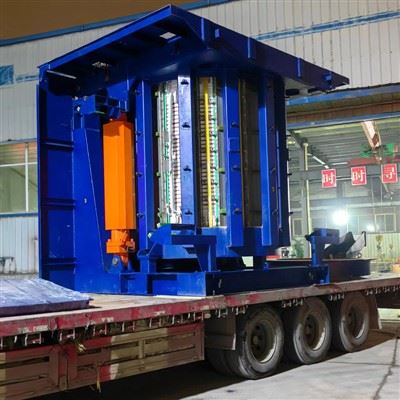
We’re ready to walk through your project, answer any questions you have, and help you make the switch to a more efficient, precise metal heating system. Reach out to us to start a conversation about your induction metal heating furnace needs, and let’s find a solution that works for your operation.
Power Supply Of Induction Furnace References
- ASM International. (2019). Induction Heating for Metal Processing. Materials Park, OH: ASM International.
- Industrial Heating Magazine. (2022). Energy Efficiency in Induction Furnace Systems. Chicago, IL: Endeavor Business Media.
- The Fabricator. (2021). Induction Heating: Advantages for Forging and Heat Treatment. FabTech Media.
Xi’an Aobang Technology Co., Ltd.
As one of the most professional metal heating furnace manufacturers and suppliers in China, we’re featured by quality products and good price. Welcome to buy durable metal heating furnace for sale here and get quotation from our factory. Customized orders are welcome.
Address: No.268, Caotan 6th Road, Economical and Technological Development Zone, Xi’an, Shaanxi, China.
E-mail: alicezhang@xaabfurnace.com
WebSite: https://www.xaabfurnace.com/
